Every employee is unique, and so should their benefits be. As the labor market becomes increasingly competitive, a strong benefits package is now crucial for attracting and retaining top talent. Generous health insurance, retirement plans, paid time off, flexible work arrangements, and learning stipends are among the most sought-after benefits that provide your employees with powerful reasons to stay.
In this guide, we'll explore the most effective benefits strategies to significantly improve your retention rates.
TL;DR
- The majority of employees are willing to stay due to generous benefits programs, with health benefits being a significant factor in their decision to remain in their jobs.
- Key retention-driving benefits include comprehensive healthcare, retirement and financial support, ample paid time off, flexible/remote work options, and career development perks.
- Investing in these perks can yield higher employee morale, lower hiring and training costs, increased productivity, and a stronger employer brand.
What is the Importance of Benefits on Employee Retention
Employee benefits are far more than a nice-to-have perk. They're a crucial retention tool that reflects how well you understand and support your workforce. Well-designed benefits policies directly address the needs of your team in terms of health, financial security, work-life balance, and more. In fact, health insurance often ranks just behind pay as the most valuable perk.
When these needs aren't met, dissatisfaction and uncertainty can increase the risk of turnover. According to Gallup, 51% of employees are actively exploring new job opportunities, with competitive pay and benefits being a key factor in their decision.
Companies that educate their employees about their benefits and offer customized options tailored to their needs are more likely to boost loyalty. In other words, the right benefits package can be a powerful retention tool, whereas a poor or unclear benefits package can encourage talent to leave.
What Are the Types of Benefits That Attract and Retain Employees
A variety of benefits can make many aspects of employees’ lives easier. Organizations that offer a mix of health, financial, time-off, flexibility, growth, and family-oriented benefits can serve employees with diverse needs. Let’s break them down into top categories:
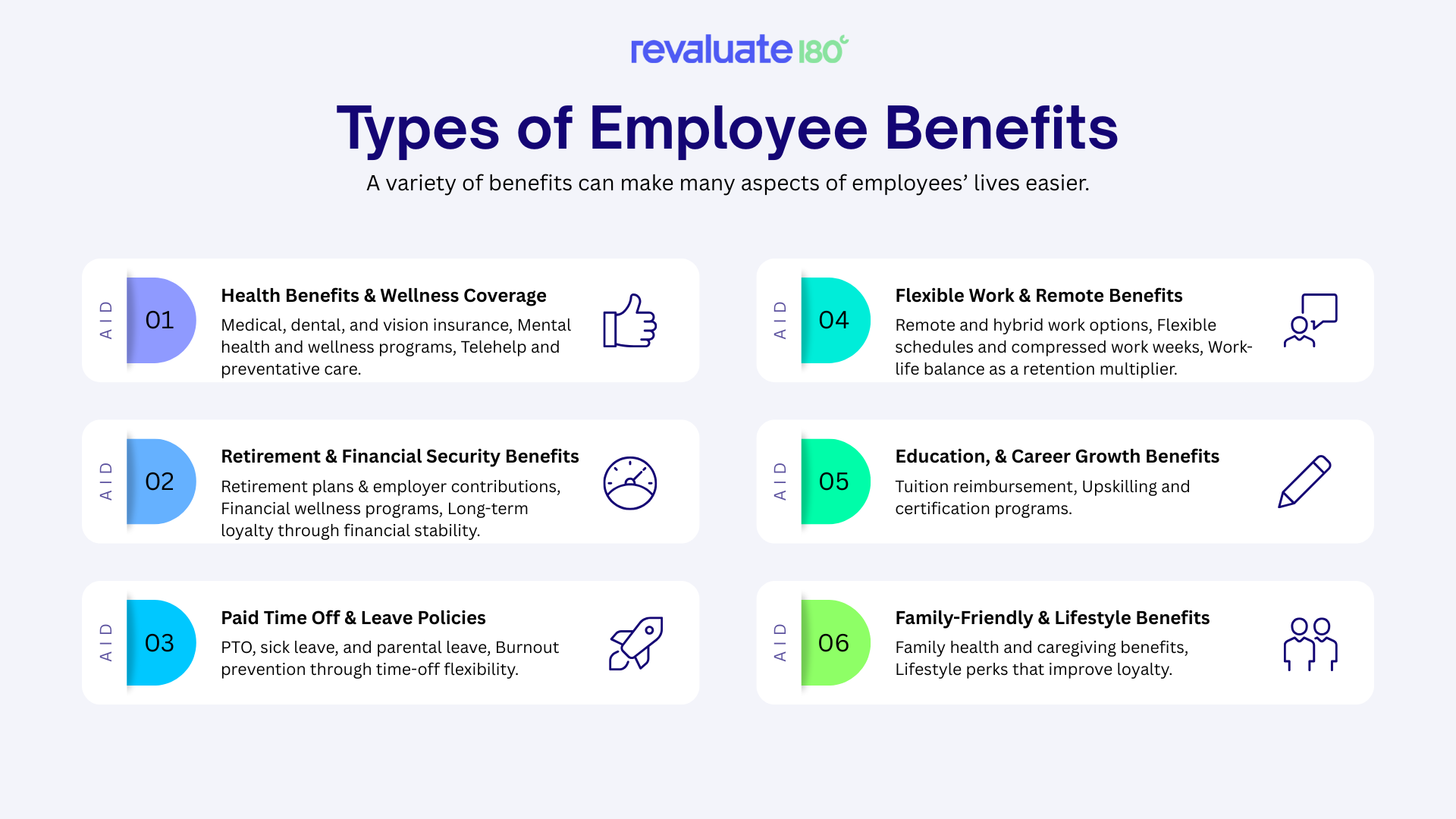
1. Health Benefits and Wellness Coverage
Medical, dental, and vision insurance is a standard plan that is often recalled as a cornerstone of a benefits package. Access to comprehensive medical, dental, and vision coverage reduces employees’ out-of-pocket costs and, most importantly, the stress that accompanies them.
Mental health benefits such as counseling therapy, stress management tools, or Employee Assistance Programs (EAPs) are increasingly seen as crucial to the offer. Employees under financial or personal stress are most likely to become disengaged and quit. Therefore, mental health programs not only improve well-being and productivity but also cut attrition.
Convenient options, such as telemedicine, health screenings, and wellness coaching, can help employees stay healthy with minimal disruption. For instance, offering easy virtual doctor visits can reduce sick days and make them appreciate the support. Preventive care programs, such as gym reimbursements and healthy living stipends, are highly valued.
2. Retirement and Financial Security Benefits
A 401(k) or pension with employer matching can be a powerful tool for employee retention. Employees value their work knowing their future is being funded. Without it, many workers may job-hop to find better retirement support. A robust retirement package demonstrates that you prioritize long-term financial stability and security.
When workers feel stable and secure, they don’t just work; they also build a commitment to their efforts. Equity grants or profit-sharing can be powerful incentives. Similarly, programs such as tuition reimbursement or mortgage assistance demonstrate an investment in the employee’s future.
Beyond retirement, good budgeting advice and guidance, such as financial coaching or student loan assistance, can help reduce stress. Helping employees manage their finances will keep them focused on work, rather than personal worries, and increase their likelihood of staying with the company.
3. Paid Time Off and Leave Policies
Paid vacation, holidays, sick days, and generous parental leave are critical retention factors. They help employees rest, care for their loved ones, and recharge without losing their minds or money. Adequate leave prevents burnout and helps employees feel well-rested and satisfied.
Flexible PTO gives staff more control over their personal and professional life. When employees aren’t afraid to use their vacation time, they return more energized and end up being more productive in subsequent quarters.
Companies that require attendance at all costs face the risk of experiencing some resentment or burnout. On the bright side, those who encourage appropriate time off tend to build a more positive culture around them. Even minor improvements in retention through PTO can help save significant sums. High retention leads to fewer hiring and training costs and higher morale, partly because employees aren’t constantly overworked when they have proper downtime.
4. Flexible Work and Remote Benefits
The COVID-19 pandemic is evidence that remote work is a valuable benefit. A survey by PeopleKeep found that 97% of employees didn’t want to return to the office full-time. Allowing remote or hybrid schedules helps eliminate stressful commutes and lets employees live where they choose. This flexibility can ultimately increase retention, as remote work also offers cost savings on commuting while raising satisfaction among both parties.
Even for in-office roles, flexibility can be a valuable asset. Compressed workweeks, supple start/end times, or a result-oriented flex hours approach can help employees balance their personal and professional lives. These benefits show trust in workers’ time management and build loyalty.
Flexible work arrangements send a strong signal to the employees. It represents freedom as the organization respects life outside work. When employees can attend appointments, family events, or take a mid-day break, they tend to stay longer. Our research highlights a lack of flexibility as the primary reason people quit.
5. Learning, Education, and Career Growth Benefits
Paying for the education in the form of college courses, certifications, and advanced degrees can be a significant draw. Employees who know their company will invest in their education are more likely to stay committed for the long term. Even partial tuition assistance can pay off by producing a more skilled and motivated workplace.
Beyond guiding courses, companies can sponsor professional development through workshops, conferences, and certifications. Upskilling programs enable employees to enhance their skills without needing to leave their current roles. They not only keep skills current, but they also signal a long-term career investment.
A structured career ladder can be of the highest value. Even powerful mentorship and training keep high-performing employees engaged. Investing in employees (rather than replacing them) means shifting spending from basic training to leadership development, innovation, and other areas. When workers perceive learning opportunities, it fosters trust and loyalty among them, helping to achieve long-term goals.
6. Family-Friendly and Lifestyle Benefits
Many employees juggle their personal lives and work, especially those with kids or elderly relatives to care for. Offering them on-site care or subsidies can drastically improve retention. Boston Consulting Group research shows astronomical returns for offering care benefits. Employees report that childcare benefits enhance their talent retention, and such perks also reduce absenteeism, allowing parents to focus on their work.
Beyond childcare, you can achieve significant strategic returns by offering paid family leave, fertility/adoption assistance, or elder care stipends that support all kinds of families. Many large employers now offer paid parental leave and related benefits to maintain their competitive stance in the market. These benefits are powerful retention levers that serve all kinds of hard-working parents and caregivers.
Other lifestyle benefits, such as wellness programs, gym subscriptions, pet insurance, and transport allowances with free meals, also factor in widely. Even small perks like providing a travel stipend or discount vastly increase employees‘ ability to maximize vacation time. Such benefits support a healthy work-life balance, which in turn boosts retention, productivity, and morale. This can ultimately help alleviate life's issues and increase the likelihood of employees being loyal for a long time.
The Impact of Strong Employee Benefits on Retention
When companies offer a robust benefits package, the positive impacts on retention are easily seen. Let’s explore how these benefits drive retention:
1. Lower Hiring and Training Costs
High retention means a lower requirement for constantly recruiting and training candidates. We note that keeping your best talent leads to lower hiring and training costs. The Center for American Progress finds that replacing an employee costs roughly 21% of their annual salary. Therefore, retaining employees allows you to save that budget, which you can then use to reinvest in talent development and innovation for the betterment of your organization.
2. Increased Engagement and Productivity
Employees who feel their needs are being met are more likely to stay engaged over the long term. A healthy and happy workforce is more motivated to work harder and smarter every day. Furthermore, research from Bank of America indicates that financial and wellness programs lead to more loyal and engaged employees, who tend to be more productive.
3. Higher Employee Morale
Stability breeds positivity and productivity. When people see coworkers sticking around longer, it builds a foundation of trust and loyalty. We firmly believe in steady, low turnover that improves morale by fostering a shared sense of purpose where everyone can contribute. On the other hand, companies with constant exits can create a risk of making workers anxious and overworked.
Stability breeds positivity and productivity. When people see coworkers sticking around longer, it builds trust and loyalty. Low turnover improves morale by creating a shared sense of purpose where everyone can contribute. On the other hand, companies with constant turnover risk create anxiety and overwork among remaining employees.
4. Reduced Absenteeism
Access to health, wellness, and leave benefits directly correlates with employees staying healthy and present at work. Comprehensive insurance and wellness programs help address minor health issues early, preventing more extended absences. Paid sick leave and EAPs mean workers don't have to come in when they're ill, reducing the risk of infecting others. This supportive strategy results in fewer unscheduled absences and reduced stress.
5. Stronger Employer Brand and Reputation
A stronger reputation feeds back into retention and goes beyond creating an impactful company culture. We believe that higher retention brings stability, desirable employers, customers, and partners within the purview, so loyal employees can also become brand ambassadors, further boosting the company’s retention.
Therefore, investing in employee benefits is a strategic investment in retention, which enables you to lower recruitment costs and increase performance and engagement, ultimately creating a culture that keeps your top talent on board at all times. Companies that neglect these benefits are at high risk of incurring the hidden costs of turnover and ultimately compromising the company’s growth.
A strong reputation enhances retention and creates an impactful company culture. High retention brings stability to prospective employees, customers, and partners. Loyal employees often become brand ambassadors, further enhancing the company's retention.
Therefore, investing in employee benefits is a strategic investment in retention that can lower your recruitment costs, increase performance and engagement, and build a culture that keeps your top talent on board. Companies that neglect these benefits face the hidden costs of turnover and risk undermining long-term growth.
Closing Thoughts
Employee benefits play a critical role in shaping organizations by attracting and retaining top talent. In today’s competitive talent market, a substantial salary alone is no longer enough. Employees increasingly expect comprehensive healthcare, financial security, career development support, and benefits that address their overall well-being.
Organizations seeking to enhance employee retention must go beyond offering benefits. They need to actively understand what employees value and use data to effectively respond to those needs. At Revaluate180, our team of experts provides organizations with data-driven strategies that enhance engagement and foster long-term retention.
Connect with us today to explore how data-driven insights can support your retention strategy.

Unlock AI-Powered Hiring Analytics
Transform the way you hire with insights that create aligned, collaborative, and high-performing teams.
- Smarter Hiring Decisions
- Reduce Expensive Turnover
- AI-Driven Insights
- Optimize Team Performance