Team cohesion can be simply defined as an invisible force that binds a group together, creating an effective team dynamic. It’s about how well people stick together and achieve the company’s mission. In a truly cohesive team, individual members feel a sense of belonging and mutual support that boosts their confidence and success rate at all times.
Think of a successful project or sports team where everyone understands their role and learns to work together toward a shared vision. Cohesion doesn’t come easy since it depends on clear purpose, open communication, and shared values built on long-term trust.
In this guide, we’ll explain what team cohesion means, why it matters to everyone in your company, and the most practical ways to build a more unified and high-performing team in 2026.
TL;DR
- Team cohesion means a group that works as one, where everyone is on the same page, committed, and connected to the shared mission.
- The importance of such teams is that they’re more productive, innovative, and satisfied. They can resolve conflicts quickly and experience lower turnover.
- Signs of strong cohesion are high trust, shared vision, open communication, healthy conflict resolution, mutual support, and accountability.
- Building cohesion starts with clarity, where everyone’s role is well defined, and then fosters ongoing collaboration. Encourage regular feedback and open dialogue, handle conflict constructively, recognize efforts, and model consistent leadership.
- Values and behaviors are crucial since cohesion grows from everyday culture. It stems from the way the team communicates, makes informed decisions, and enforces values, which shapes how it feels.
What is Team Cohesion?
Team cohesion is the degree to which a team sticks together and works as one towards a shared objective. In practical terms, a cohesive team feels like a single organism rather than a loose collection of people working individually.
Members share a strong sense of mutual unity and commitment, understood and recognized by each other. Research describes cohesion as the degree to which everyone is aligned, connected, and committed when they share a common purpose.
It includes both organizational factors that involve having clear goals, well-defined roles, and processes that are maintained with a strong emotional bond. Since cohesion is dynamic, it can reduce or increase over time. A new team may form with excitement, but unless there is a strong purpose built on trust and clarity, it risks faltering.
Why is Team Cohesion Important?
Cohesion is far more crucial than just a good idea since it’s proven to be an essential metric of performance and engagement. Cohesive teams perform better and faster than those in silos. For instance, cohesive teams complete objectives more efficiently and report higher productivity than disconnected teams.
Members of a cohesive team enjoy greater job satisfaction, confidence, and commitment. Since trust is a key ingredient of cohesion, it brings many strategic benefits. In high-trust companies, employees experience 50% higher productivity and engagement than in other companies.
Leaders notice the difference as well, since managers of cohesive teams can step back, trusting team members to self-organize, delegate, and innovate, rather than micromanage every task. Conclusively, team cohesion translates directly into better outcomes.
What Strong Team Cohesion Looks Like?
Teams with high cohesion share clear traits and signs of such a team, mainly including:
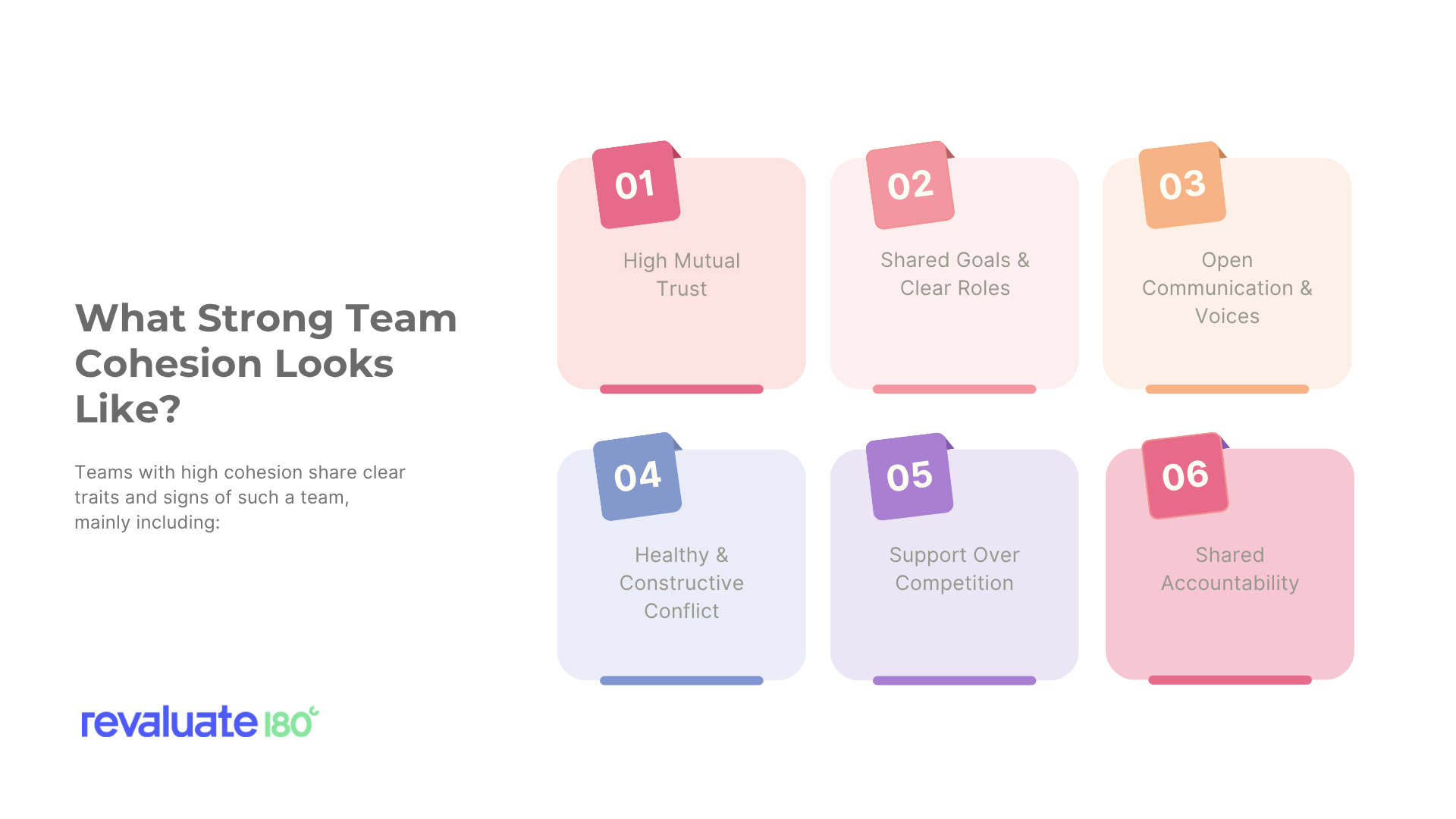
People trust each other
Team members genuinely trust each other. No one shirks responsibilities or throws colleagues under the bus for any self-interest. Everyone knows they can rely on others when needed, and information flows freely so that no one feels left out. This kind of trust becomes a glue that sticks them all together.
Everyone understands the team’s goals
Everyone feels motivated and aligned when they share a strong and unified purpose. Members share the same vision and see how their individual tasks contribute to it, especially through their collaborative work. When goals are aligned and clear, collaboration is intentional and focused.
Team members speak up and share ideas
People feel safe when they don’t hesitate to speak up about conflicts. Every member has a voice in discussions and decisions, and opinions are valued, even if someone doesn’t have the final say. Questions, ideas, and feedback flow openly during the work process, inviting ongoing dialogue to resolve small issues that can be caught early.
Conflicts are handled openly and respectfully
Rather than avoiding disagreements, cohesive teams welcome them, and as a result, disputes are resolved effectively with mutual respect. When conflicts arise, the team actively discusses the issue and emphasizes finding solutions rather than blaming each other.
People support each other instead of competing
Team members prioritize each other over themselves. Personal egos take a back seat so teams can breathe in the potential environment. There is little to no backbiting or internal rivalry in cohesive teams, since they share both wins and failures. To achieve the shared mission, each person understands that the group’s achievements matter most.
There’s a sense of shared responsibility
Every member feels responsible for the team’s outcomes through shared accountability. People hold themselves and each other accountable to the group’s standards because it creates a butterfly effect. If one person underperforms or misses a deadline, it can derail the whole team’s efforts. This awareness means they either ask for help proactively or raise flags when they encounter certain conflicts. A cohesive team functions as one unit, with members committed to achieving a goal in the same direction.
How Team Cohesion Actually Gets Built (Practical Strategies)
Strong cohesion doesn’t manifest just because people want to work together happily ever after. It arises when team structures, everyday work interactions, and leadership practices continuously reinforce unity. Practical steps to build cohesion include:
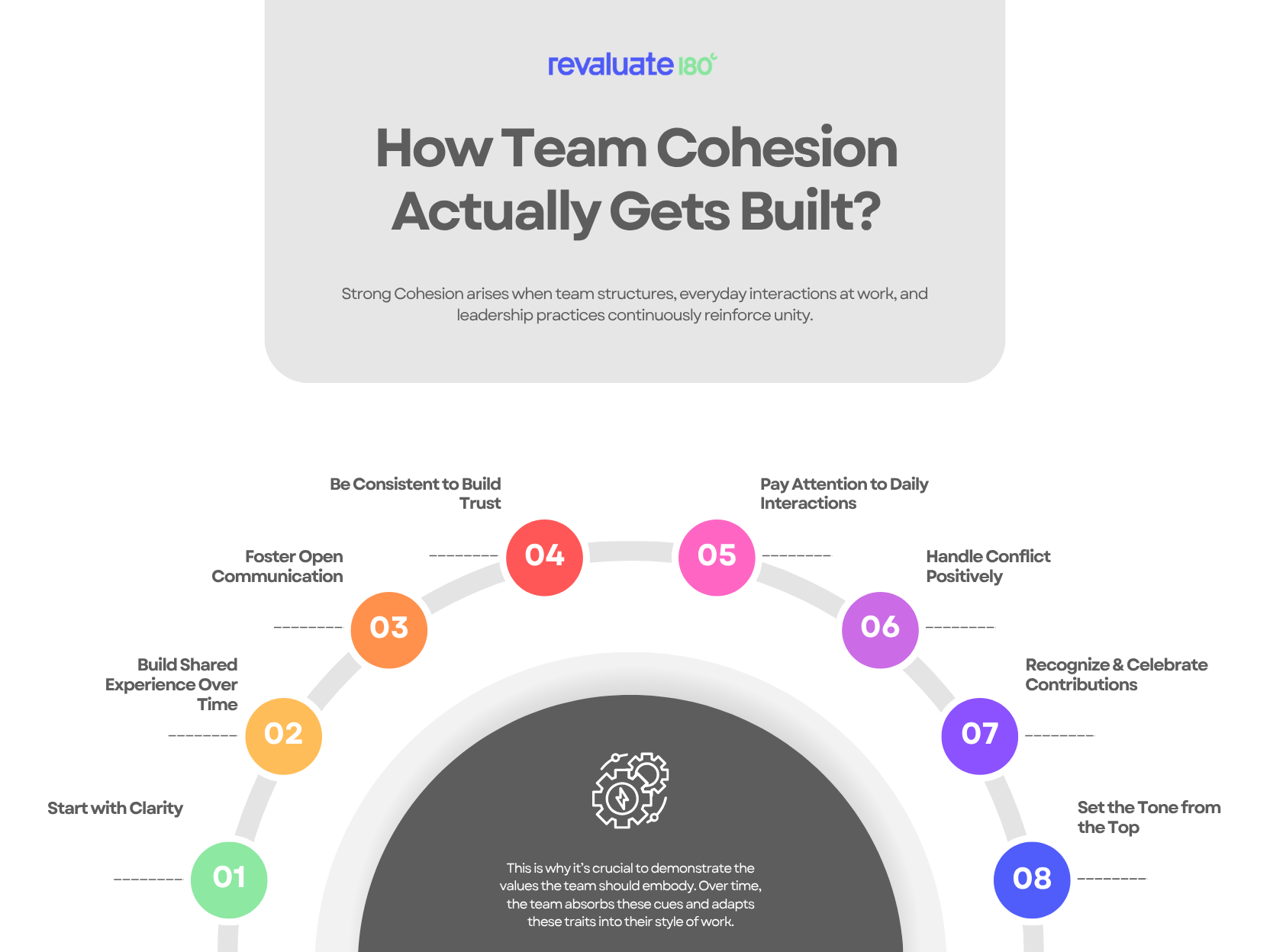
1. It starts with clarity, not bonding
A team needs a clear purpose and goal to fulfill the appointed role before any fun bonding happens. Leaders must define the vision and prioritize objectives first to ensure every member understands their responsibilities clearly. Formulate your vision and set clear, long-term goals with deadlines. Also, ensure your team knows where they’re moving and what each person’s role is.
When objectives are clear and goals are defined without confusion, team members can coordinate smoothly and create an effective team dynamic. Without clarity, group outings or icebreakers are pointless since confusion can easily seep in. Try starting with a new team by co-creating a mission statement or a goal hierarchy.
2. Shared experiences matter more than one-off activities
Occasional team-building events have value, but steady collaboration matters more. Cohesion grows through collaborative work on real tasks. For instance, having team members co-lead projects and pair up on complex tasks, or regularly collaborate on important milestones that create long-lasting connections.
Beyond the occasional workshop or retreat, it’s equally crucial to create a regular stream of opportunities to sustain the team’s energy and reinforce the bonds. In other words, it’s crucial to schedule ongoing checkpoints, joint problem-solving sessions, or even informal weekly check-ins.
3. Open communication keeps teams connected
Cohesion thrives when an honest narrative surrounds the workplace. Encourage everyone to discuss ideas, a clear path to achieving the defined success, and day-to-day conflicts that arise. Set up a reliable communication model, such as daily or weekly standup meetings, so each member is aware of what others are working on.
Use multiple channels so information flows freely without any barriers. Emphasize that asking questions and admitting mistakes will not be punished. Implement a daily check-in so everyone can hear each other’s priorities.
This might establish a rule that no email goes unanswered for 24 hours, or dedicate part of every meeting to open feedback. Through time, clear and consistent communication removes misunderstandings and keeps everyone feeling included and informed.
4. Consistency builds trust
Predicting certain behaviors can boost a team's confidence. Leaders crave consistency since it literally helps us understand each other to become a backbone of trust. When leaders act erratically, trust erodes even faster than with any predictable leaders.
For instance, if you say you will update the team every Friday, make sure to build this as a habit so teams will quickly learn to rely on it.
Gradually, you can see reliable behavior by leaders and their teammates to help make each other feel secure, so people know what to expect. This way, you can remove anxiety and let relationships strengthen naturally.
5. Small interactions shape how teams feel
Small, everyday moments often become the foundation of team culture. Good gestures, kind words, a helpful nudge, or a quick acknowledgment can make a big difference. For example, regular one-on-one check-ins show that leaders care about individuals. Habits like these, including demo sessions, keep everyone aligned and engaged in the long term.
Encouraging frequent feedback catches issues very early, so habits like daily check-ins or brief demo sessions keep everyone aligned and engaged. Conclusively, it’s not just big team-building days that count, but how team members and leaders treat each other every single day at work. These constant positive interactions can accumulate into a culture of support like no other.
6. How conflict is handled matters more than avoiding it
Avoiding disagreements might be the safest bet to avoid conflicts, but it prevents authentic cohesion. It’s better to encourage a healthy debate than to shut down completely and assume everything. Teach the team to focus on solutions during conflicts and to listen actively without judgment. This is where cohesive teams accept each other wholeheartedly and practice role-playing a difficult conversation or debriefing conflicts openly.
If you give it some time, this can build into a culture where people know they won’t be punished for speaking up, and this can be a huge opportunity to build long-term trust and cohesion.
7. Recognition reinforces positive team behavior
Positive reinforcement cements genuine connections. Acknowledging when team members help each other or go above and beyond encourages more of the same. Make it a habit to celebrate wins together, for instance, at the end of a project, thank everyone publicly for their contribution in specific roles, or institute a shout-out moment in weekly meetings.
This could mean praising someone’s effort in front of peers, which not only rewards that individual but also signals to others what behaviors matter the most. Try showing recognition immediately, not waiting until the end of the quarter. Public recognition is more crucial than you think! It shows you care for the people in the company and inspires others to follow. For example, consistent appreciation creates a positive loop where team members feel valued, motivated, and supported throughout all quarters.
8. Leadership behavior sets the tone
Leaders can significantly influence cohesion by how they themselves behave with the team. If leaders build a foundation of honesty, accountability, and respect, the team naturally gravitates toward it. This means you’re now leading by example: if you expect team members to give candid feedback, you should welcome it and act on it about your own leadership.
If leaders are withholding information or seem to be playing favorites, it quickly undermines trust and gives rise to cynicism. This is why it’s crucial to demonstrate the values the team should embody. Over time, the team absorbs these cues and incorporates them into their work style.
How Values and Behaviors Shape Team Cohesion
Team cohesion isn’t built by occasional fun activities alone; rather, it's molded by everyday culture. A team’s underlying values, norms, and decision-making styles determine how cohesive it feels. Suppose two teams with the same goals have two different motives. First, one might thrive and feel united, while others feel tense and disjointed. The difference is often in their values and behaviors.
Since the said cultural factors can be subtle or hidden, many leaders rely heavily on tools to find a resolution. We at Revaluate180 help leaders through values- and behavior-based assessments that uncover how a team’s communication style, decision-making patterns, and value alignment are affecting cohesion. These insights can help surface misalignments and restore order.
Closing Thoughts
Team cohesion is a strategic advantage worth investing time and effort to foster a healthy and productive company culture. Leaders can start small by clarifying a project’s mission together, establishing communication norms, and recognizing each other’s contributions.
These practices add up to a powerful, self-reinforcing culture of unity where the payoff can be immensely rewarding. When a team learns to collaborate seamlessly, it can take an organization on the next path.

Unlock AI-Powered Hiring Analytics
Transform the way you hire with insights that create aligned, collaborative, and high-performing teams.
- Smarter Hiring Decisions
- Reduce Expensive Turnover
- AI-Driven Insights
- Optimize Team Performance