Who is responsible for employee retention? It’s a question that sparks debate in every organization when this topic comes up. Most of the workers point fingers at HR, but is it true? Or is it actually everyone’s job when it comes to retention?
In a world where employees expect purpose, flexibility, and growth, retention has to be discussed as a shared initiative rather than a debate. When leaders lead with empathy, managers engage meaningfully, and employees contribute to the culture, creating a collaborative ecosystem of trust and growth. But how much accountability should one take?
TL;DR
- HR is not the only person responsible for employee retention. It’s a shared responsibility between leaders, managers, and employees. Leaders set the tone for the cause, HR builds the system, managers create engagement, and employees maintain the culture around the company.
- Organizations need to approach retention collectively, as it’s supported by expert insights to achieve higher engagement, stronger performance, and lower turnover rates across all quarters.
Understanding Employee Retention
Employee retention is no longer about long-term stay, but about creating a workplace where people choose to stay and thrive.
With hybrid work, digital transformation, and career flexibility, employees now evaluate their workplaces not only on pay but also for shared purpose and psychological safety. According to the 2024 State of the Workplace report by Gallup, employees who believe their work aligns with their company’s mission are 5x more likely to stay long-term.
Keeping people from leaving isn’t the goal in retention; rather, it's about keeping them productive. The whole point of retention shouldn’t be why they go, but why they stay.
Employees who stay out of obligation often reported contributing very little to growth and culture. Disengaged workers cost companies up to 34% of their salary annually in lost productivity. Real retention requires strong growth opportunities, trust, and emotional understanding.
When talent walks out, he takes your time, culture, and credibility with him:
- Financial cost: SHRM report estimates replacing an employee costs around 2-4 times their annual salary.
- Culture impact: Turnover erodes morale, spreading anxiety and uncertainty.
- Productivity loss: Knowledge gaps and a lack of curiosity can significantly slow down teams and projects.
These can be significant causes of poor retention, as they damage an organization’s reputation; therefore, making it a brand priority and strategy must be your first step.
Why Employee Retention is a Shared Responsibility
When companies make their HR department responsible for retention, it is limited to only exit interviews, perks, or occasional engagement surveys. But HR alone can’t fix toxic leadership, poor management, or unrealistic workloads.
HR can design social systems, but they’ll only work when supported by all the leaders of the organization. Without collaborative efforts, retention programs often remain on paper and become a compliance exercise instead of a culture shift that every company needs.
Employee retention elevates both ownership and influence. When leaders take responsibility for creating an ethically fair and inspiring workplace, managers and employees shape the culture every day.
When ownership and influence complement each other, retention becomes an integral part of the company’s DNA. This is when every individual working in the company feels responsible for creating the experience for others around them.
Stronger engagement requires a strong psychological safety and trust that often comes from shared accountability:
- Leaders inspire by their actions.
- Managers nurture talent through active feedback and support.
- Employees sustain the legacy and culture through teamwork and respect.
Companies like Adobe, Salesforce, and HubSpot have proven that when every individual takes responsibility for culture, retention naturally follows. As expected, Industry-leading engagement and loyalty metrics increased with collective accountability.
Who is Actually Responsible for Employee Retention in an Organization?
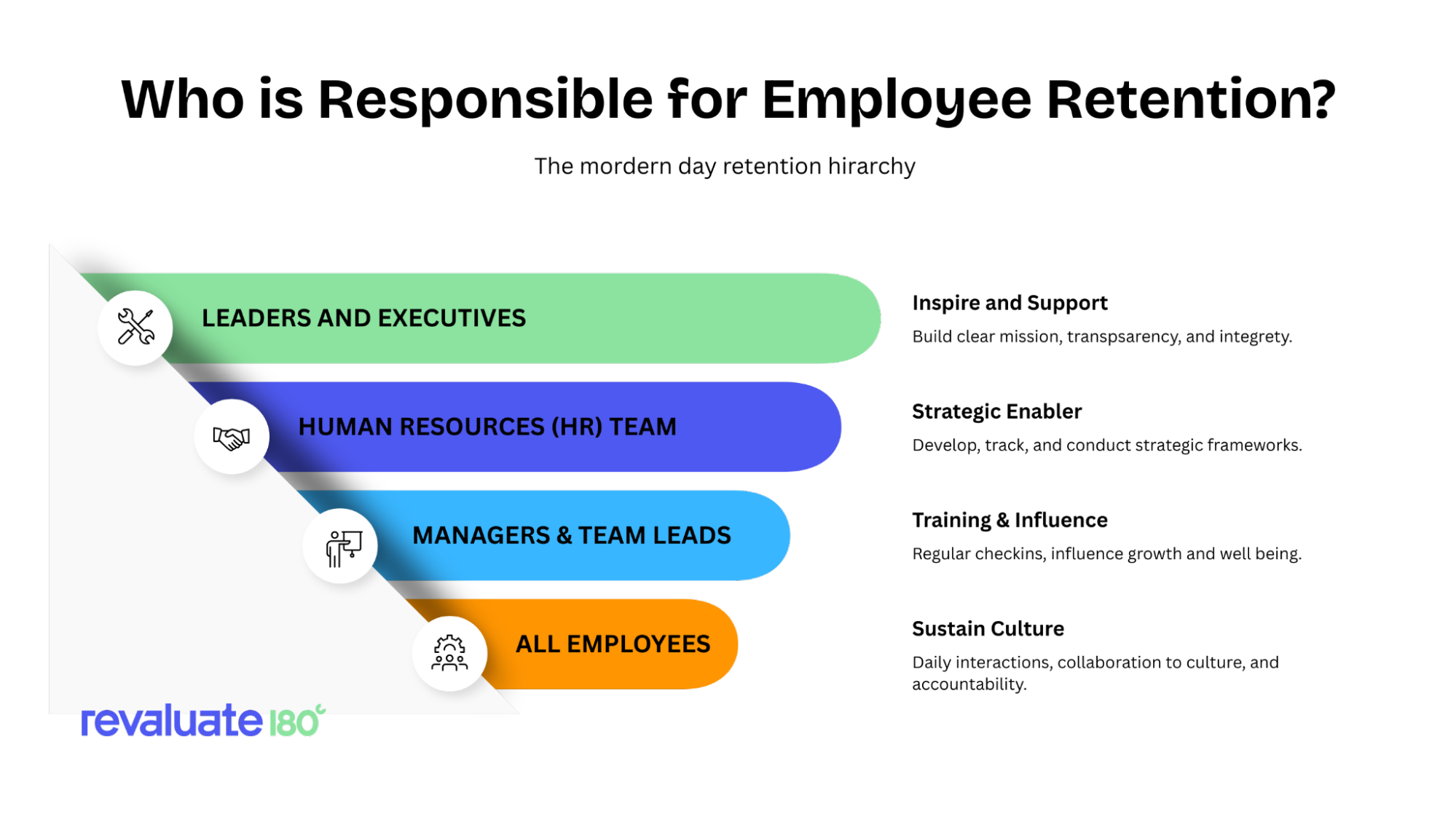
1. Leaders and Executives
Retention should be a top priority, and so it begins at the top. Leaders and executives define how employees experience trust, shared purpose, and opportunity to elevate retention.
Responsibilities can be measured in:
- Building a clear mission that people can rally behind.
- Demonstrating transparency and integrity, especially in uncertain times.
- Investing in the best retention strategies as a long-term growth lever and not just a cost center on record.
Since toxic leadership remains the primary reason employees leave, leaders who prioritize empathy and effective communication create an environment that fosters trust and loyalty to thrive.
2. Human Resources (HR) Teams
HR is the fundamental backbone of retention since they’re responsible for designing experiences that foster engagement and belonging.
Their responsibilities include:
- Developing career growth frameworks and employee recognition systems.
- Tracking retention metrics and turnover data, and reporting further.
- Conducting stay interviews to identify early signs of exits that can be averted.
- Coaching leaders and managers to prioritize people-first practices.
HR is not the owner of retention but a rightful strategic enabler that succeeds only when the right people in the organization have their active support.
3. Direct Managers and Team Leads
Managers have the most immediate impact on retention since it accounts for a direct 70% of engagement variance. That’s why their influence shapes employees’ daily experiences, such as feedback, workload balance, and appreciation. Effective managers should be enthusiastic about:
- Holding regular check-ins and performance conversations.
- Recognizing constant efforts and not just during review meetings.
- Advocating for their team’s personal and professional growth and well-being.
4. All Employees
Retention is a shared duty of every employee working in the company. While leadership and HR set the stage for actions, employees sustain culture through daily interactions, collaborations, and accountability when needed.
Employees can contribute to retention efforts by:
- Providing constructive feedback and articulating their needs within the organization.
- Supporting peers and maintaining a positive atmosphere around their teams and events.
- Investing in their own skills in growth and personal and professional development.
How to Create a Workplace That People Don’t Want to Leave
1. Offer Competitive Compensation and Benefits
Retention starts with ethics and morals. Transparent pay, performance-based bonuses, and meaningful benefits signal respect and recognition. 2025 insights offer flexibility and holistic well-being by supporting participation in programs such as mental health days, remote working options, and family support, in addition to salary.
2. Create Mentorship Programs
Mentorship fosters trust and accelerates long-term growth, bridging the generational gap and promoting inclusion. LinkedIn’s 2025 learning report found that employees with mentors are 35% more likely to succeed long-term and have reported higher satisfaction scores.
3. Recognize Accomplishments Regularly
Recognition is fuel for engagement. No matter if the achievements are small or big, acknowledging them makes a huge impact. You can do that through thank-you notes, a public mention, or a team spotlight that makes every talent feel recognized and valued.
4. Support Skill Development
Employees don’t just want jobs; they prioritize career opportunities and security. Offering personalized learning paths, certifications, and opportunities for lateral growth keeps their ambition alive, enabling them to thrive at work, especially when they see a future within the same organization.
5. Prioritize Work-Life Balance
The biggest enemy of retention is stress and burnout. You can address this problem by supporting flexible work hours, remote work arrangements, and wellness programs that prioritize work-life balance and help employees manage their personal lives more effectively.
6. Hire for Cultural Fit and Future Potential
Retention starts even before the first day of joining. Hiring people who align with the company values and have long-term potential reduces early attrition. The best organizations hire for fit and trajectory of those people who’ll evolve with the business.
7. Use Stay Interviews
Stay interviews are proactive tools used to understand the main reasons why employees stay. This is a great way to determine what is working and what isn't within the company. These quarterly conversations help uncover motivators, career aspirations, early signs of dissatisfaction, and productivity issues, allowing managers to address these issues before employees leave.
How Revaluate180 Helps Build a Culture of Retention
Revaluate180 empowers organizations to move from guesswork to collecting actionable insights regarding employee retention. Its data-driven approach helps identify the root cause of disengagement and build an action plan that actually works.
Through advanced analytics, Revaluate180 highlights patterns in leadership, team dynamics, and culture where employees feel disrespected or unsupported at work. If you want to transform your workplace and strengthen engagement across every level, book a free consultation with us today.
Final Thoughts
Everyone is responsible for employee retention, as it involves collaborative efforts. When leaders inspire, HR enables, managers nurture, and employees sustain engagement in line with the competition. Good retention is the result of a shared purpose, accountability, and genuine care for one another within the team.

Unlock AI-Powered Hiring Analytics
Transform the way you hire with insights that create aligned, collaborative, and high-performing teams.
- Smarter Hiring Decisions
- Reduce Expensive Turnover
- AI-Driven Insights
- Optimize Team Performance