Companies hire employees with the confidence that their skills and experience will help the company scale greater heights, recover from existing losses, and keep employees satisfied while they work for them.
However, the initial experiences in the new company often create a lasting impression, which can motivate employees to work hard or choose to switch companies within the first few months.
An ineffective onboarding process during the first few weeks at the workplace has been a crucial reason for many employees to leave their jobs within the first six months. Onboarding initiatives and programs are, therefore, mandatory if you wish to achieve higher retention rates in your company.
In this post, we will explore the importance of onboarding initiatives in enhancing employee retention and how a robust onboarding program helps the company establish itself as an employee-friendly organization.
TL;DR
- Companies must make employee retention initiatives a mandatory part of all stages of an employee’s lifecycle in the company.
- Retention efforts must begin from the moment employees join a company, through a smooth and transparent onboarding process.
- Onboarding initiatives, such as providing an essentials checklist, connecting employees with new team members, conducting sessions on company benefits and initiatives, and offering mentorship programs, help employees create a positive impression of their new company.
- Find out how a great onboarding experience helps avoid early, unexpected turnover and helps employees resolve their concerns at the earliest.
What is Employee Onboarding?
Onboarding refers to the process of getting the employee familiar with their new job, work team, and the company's work culture and environment where they will be joining. This process ideally begins a few days before their date of hire and lasts for a few weeks, gradually transitioning them into their job role.
Onboarding involves the following activities, which can be carried out in any order depending on the company:
- Information on attendance, core working hours, leave policies, lunch breaks, and more.
- Provision, installation, and training in the use of company assets, such as laptops, mobile devices, and other equipment required by the new employee.
- Awareness of company policies, company mission, business objectives, benefits, legal obligations, and PoC’s for concerns in any areas.
- Formal introduction to team members, managers, group, and part leaders. An orientation session with top company leaders helps employees have direct conversations and clarify any concerns.
- Continuous feedback and onboarding surveys to identify gaps between employee expectations and experiences.
A good onboarding experience can provide the following benefits, as per statistics from BambooHR:
- 89% of employees are actively engaged at work.
- 85% employees understand and fully use their company benefits.
- Effective onboarding helps employees contribute 18x more commitment to their workplace.
Any negative experiences or a lack of transparency in the above activities can often cause an employee to leave their new job, sometimes within the first few weeks, before onboarding is complete. We will further learn how onboarding can make or break an employee’s future in the company.
What is Employee Retention?
Employee retention refers to a company’s ability to keep its employees happy and satisfied while they work for the company, without considering changing their job or leaving the company. Retention is a result of several employee-friendly initiatives aimed at valuing overall employee well-being and improving their productivity.
Companies must keep all their policies and initiatives focused to ensure maximum employee retention, starting right from employee onboarding. The first 2 months from an employee’s joining date are a crucial period for a company to convince the employee that they can be their long-term employer.
The following onboarding statistics show how onboarding experiences shape retention and turnover patterns in a company:
- 44% regret joining a company after their very first week.
- 70% of new hires decide to stay or leave within the first month, going up 95% after 2 months.
- 62% of new hires make an accurate first impression of the company, which is hard to change over time.
- 87% of hires wish to have a buddy-mentor, or a friend at work.
Onboarding must cover both formal orientation sessions and informal meet-and-greet experiences, where each new hire receives a warm welcome in the way they expect. So, companies must pay attention to every minute detail while designing a comprehensive onboarding program that aims to retain every new hire recruited by the company.
Stages of Onboarding That Influence Retention
The onboarding process encompasses a range of activities and initiatives, including formal orientation and training sessions, as well as informal meetings and engagement activities. Each activity is designed to meet the expectations of new hires, aiming to provide them with a positive experience and shape their view of the company.
Here is how onboarding is carried out in different phases:
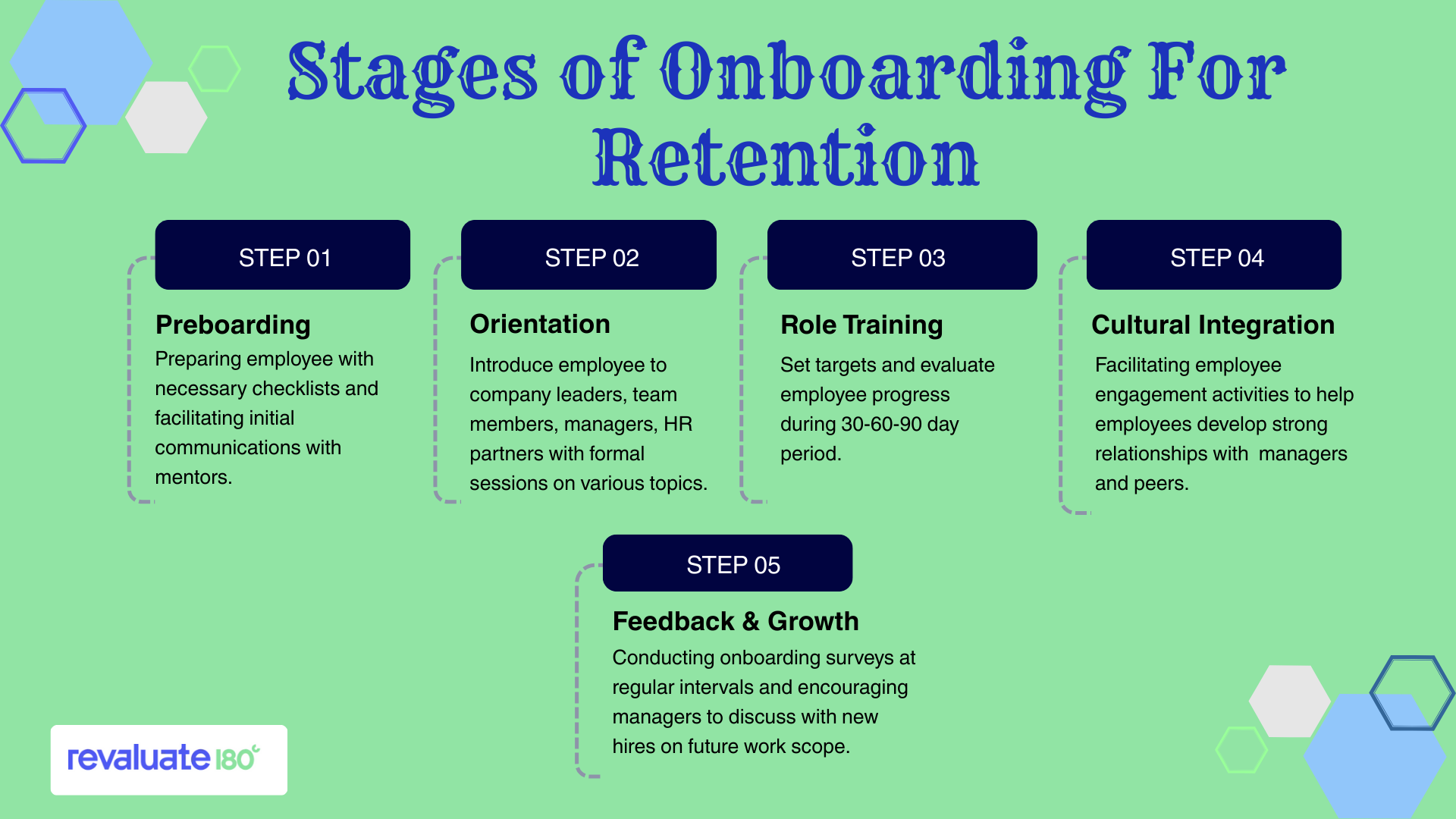
Stage 1: Preboarding (Before Day One)
The initial few days after receiving the offer letter, or a week before joining the company, can seem straightforward, as if simply ticking off checklists and performing verifications for new hires. However, the preboarding stage can be crucial in crafting your company’s image as an employee-friendly brand.
This stage involves sending official email communications that provide a brief agenda outlining what the employee can expect during their first day and week at work, and encourages new hires to post their queries and concerns to relevant contacts.
Early communication before the actual onboarding helps new hires feel less nervous or anxious about the new workplace environment. In fact, getting in touch with their new team’s HR business partner, a buddy-mentor, or a team member from the same job designation actually helps new hires feel better prepared for what they can expect in their first few weeks and months at work.
Official communications, along with ice-breaking activities, such as connecting with the new team on LinkedIn or other social media platforms, demonstrate that the company wants its employees to feel comfortable long before they start work.
A BambooHR survey shows 1 in 4 employees cry during their first week at work. Just sending routine automated official communications or broadcasts before onboarding, and non-responsive human employees are often the first stage of apprehension for employees regarding how the company will treat them.
Stage 2: First Day and Orientation
The first day or 2-3 days at work are often filled with formal orientation sessions where HR professionals, C-Suite leaders, members of the technical staff, and other department heads discuss the company’s vision and business goals with employees.
A representative from every HR department, including payroll, benefits, leave and attendance, health and wellness, legal advisors, and many more groups, addresses the employees on common concerns to ensure psychological safety and create the best first impression for the company.
The first day at work can be overwhelming for employees, especially when they need to attend several orientation sessions and meetings back-to-back. Separate handouts or e-resources can be provided after each session or meeting for employees to reference or access contact information.
Similarly, the introductory sessions must be well-spaced with sufficient breaks for the new hires to understand and provide their feedback on what they have learnt.
In addition to company-level introductions, the first day(s) must include the employee meeting the new team and the immediate manager. Going out for lunch with the new team member or taking a coffee break can be an icebreaker in an otherwise packed orientation schedule on the first day.
On their first day at work, employees seek a review of the company’s policies, a company tour, familiarity with work procedures, and a buddy to talk to.
Stage 3: Role Training and Early Performance Support
The 30-60-90-day periods are crucial in the onboarding journeys of new hires. By the first month, the employees become well-aware of company policies, benefits usage, workflows, and other company-related initiatives.
It can take 60 to 90 days for employees to become comfortable with their new job role, learn the existing processes, overcome challenges, and utilize their skillset to solve problems.
Training new hires can be structured, “figure-it-out”, or a mix of both. Structured training helps in technical areas, such as understanding how to raise professional workflows, facilitating meetings, handling clients, and so on. Reading technical documentation, learning past challenges at work, and how they were solved are often left to the new hires to figure out.
Although each employee has a different learning curve and prefers different modes of learning, the company must set clear goals that they must achieve within 30-60-90 days. Onboarding survey questions at the 30-60-90 milestones can help HR professionals understand the learning pace and identify areas that require assistance for new employees.
It is during the early and mid-training period that managers and mentors play a crucial role in guiding and supporting the employee. A warm relationship with periodic check-ins and assistance helps managers identify employee concerns, provide them with quick solutions, and prevent them from thinking of leaving their jobs.
Stage 4: Social and Cultural Integration
New hires seek direct, firsthand employee experiences in the first week to help them form their opinion of the company. Furthermore, recruits often look out for people from their backgrounds, based on the languages they speak, or those from the same school, college, city, or country, or individuals with whom they have previously worked.
Finding employees of their own kind when joining a company makes new hires feel a sense of belonging in the company. Hiring from diverse backgrounds is beneficial for companies, as it helps ensure long-term retention and promotes diversity.
Companies can initiate employee engagement initiatives from the time of onboarding, motivating employees to actively participate and interact with team members, group leaders, peers, and HR professionals.
Pairing every new hire with a buddy or mentor from the same team or having a common background helps employees gain firsthand experience in navigating the company in its initial days.
Similarly, the team can devise several icebreaker activities and welcome rituals to help the new employee feel comfortable and valued in their new role.
Stage 5: Continuous Feedback and Growth
Most decisions regarding turnover among new hires occur due to concerns or issues that arise during their onboarding period, which typically spans from the first day to 60 or 90 days. That is why it is essential to conduct periodic onboarding feedback surveys at different intervals during this period to identify potential concerns that can prompt hires to consider leaving the company.
Onboarding surveys and personal check-ins help managers and HR professionals resolve misunderstandings and address employee concerns at the earliest opportunity, preventing turnover and ensuring longer employee retention.
Employee feedback and survey results are crucial for planning the proper training, coaching, and development programs that can help employees become more productive and feel satisfied while working in the company.
Onboarding surveys comprise several questions spanning different areas, where employees can share their experiences and feedback through rating scales or express their thoughts and concerns.
Periodic feedback collection and providing timely responses to employee concerns demonstrate that the company takes feedback seriously and is committed to resolving concerns promptly. Such swiftness makes employees realise how raising concerns using proper channels can be beneficial both for their growth and the company’s.
How Onboarding Impacts Retention
Each stage of the onboarding process carries a risk of potential turnover, which can be mitigated with caution and awareness. By incorporating the right balance of formal and informal initiatives, onboarding can positively influence long-term retention in several ways.
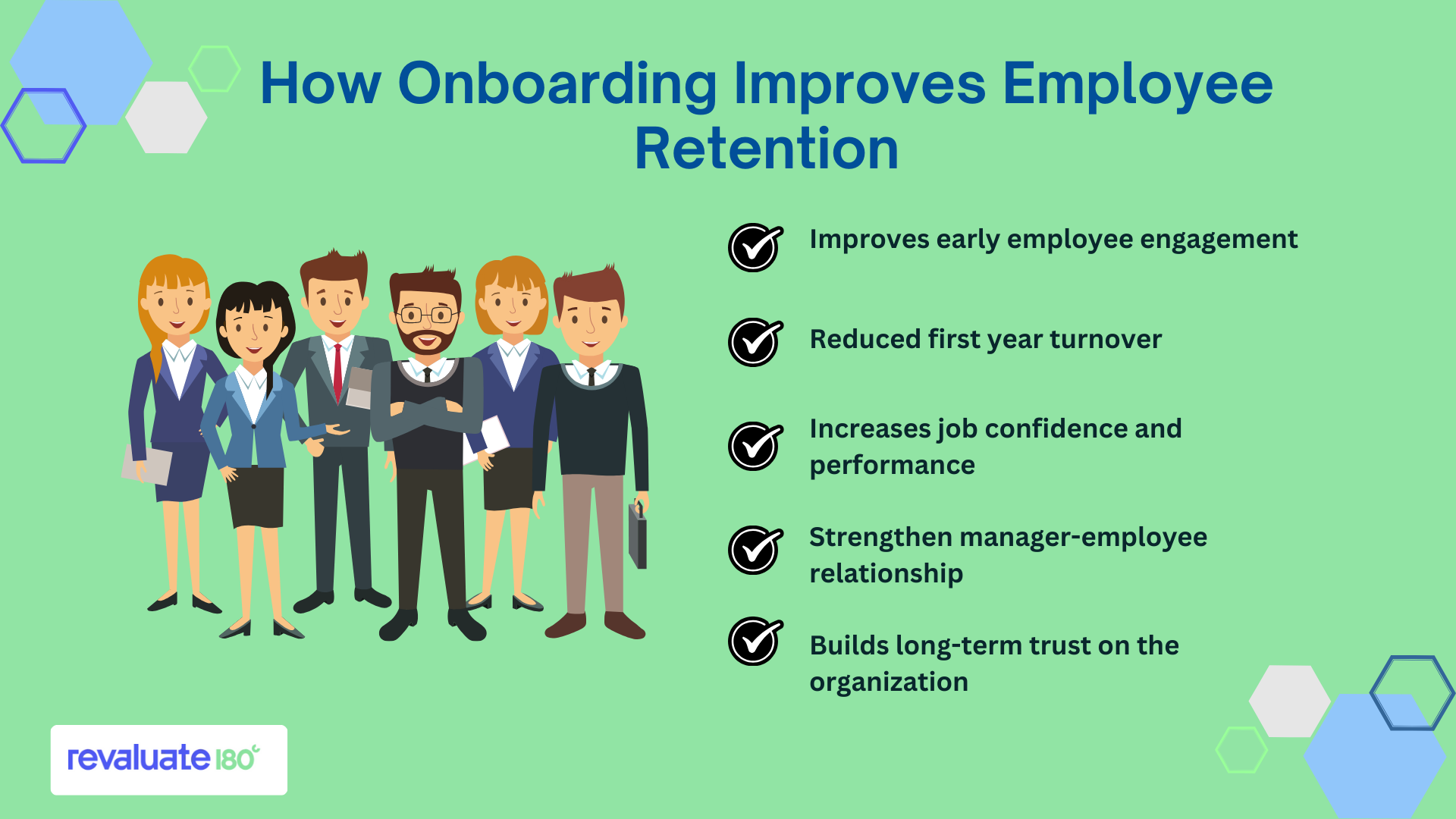
1. Improves Early Engagement
Connecting with a buddy, mentor, team members, and managers during pre-boarding or the first few days at work helps reduce freshman anxiety. Ice-breaking conversations and welcome rituals help new employees notice signs of active engagement from the start, motivating them to stay engaged.
2. Reduced First-Year Turnover
The first month during onboarding can prevent almost 70% of new hires from feeling that they have made the wrong decision to work in a company. Proper feedback channels, direct interactions with managers, team members, peers, leaders, and C-Suite members can help employees understand how everyone has a future in the company.
3. Increases Job Confidence and Performance
Sufficient awareness sessions and training on company policies and benefits, who to reach out to during concerns, and how to navigate everyday workflows help remove initial barriers that can make employees feel anxious during onboarding. Awareness and transparent communication from the company help new hires feel confident from the moment they join.
4. Strengthen Manager-Employee Relationships
Managers must spend a given amount of time every day with new hires for the first week to understand what they have learned each day. These meetings can take place at their desks or in recreational areas, such as the cafeteria. Similar relationships with team members help employees to blend into their new workplace slowly.
5. Builds Long-Term Trust in the Organization
When employees see that a company’s HR professionals, C-Suite leaders, managers, and team members put considerable effort into welcoming them and ensuring they have no discrepancies in their new job role, they feel valued and comfortable within the company. This emotional connection helps employees establish the trust that the company seeks, fosters long-term retention, and enables it to resolve valid employee concerns effectively.
Best Practices to Improve Onboarding for Better Retention

Now we know that the onboarding process can significantly impact an employee’s initial impression and their likelihood of staying with the company in the long term. Here are some best practices that can help create a positive impression of your company’s culture and work environment, thereby reducing employee anxiety.
1. Set Clear Expectations From Day One
Maintain clear and timely communication with the new employee regarding their expected tasks and responsibilities from the first day of work. Ensure your employees are well-informed about whom to contact for any concerns, how they can learn about their new job role, and the timelines for their transition into their new role.
2. Use Structured 30-60-90-Day Plans
Discuss with team managers and leaders how new hires are expected to transform during the different phases of the onboarding period. Then create evaluation plans and feedback surveys to track how employees are faring after 30, 60, and 90 days since onboarding.
3. Assign Onboarding Buddies or Mentors
Pairing each new hire with a similar new buddy can help the pair navigate the onboarding process more efficiently and also lead to the creation of new relationships. Assigning a senior employee to a new hire based on their background can also help the new hire gain better experiences and expertise related to working in the company.
4. Train Managers to Onboard Effectively
Coach managers and team leaders to understand the feelings and initial anxiety of a new hire. Train them to handhold them during every week of the onboarding process by systematically assigning them tasks to transition them to their job role.
5. Personalize the Onboarding Experience
Each employee has a different preference for learning and skimming through onboarding training sessions and their snippets. Ensure you provide various modes of introduction, including videos, handouts, PDFs, face-to-face interactions, and more, so that employees receive the experience they expect.
6. Make Feedback Two-Way Early
Encourage new hires to participate in the process of providing timely and valuable feedback rather than remaining silent. Stress the importance of feedback and how your company takes concerns seriously, valuing feedback.
7. Connect Onboarding to Career Growth
Streamline the onboarding process so that employees have a smooth transition from continuous training and orientation to performing their actual job tasks. Enhance the complexity level of their job role by implementing appropriate role changes and responsibilities, ensuring they experience visible career growth.
8. Use Technology Without Losing the Human Touch
Chatbots and AI assistants are becoming increasingly helpful during the onboarding process, as they familiarize employees with the rules and workflows of the new company. However, they can never replace an actual HR partner, buddy, or mentor whom employees can connect with at any time.
The absence of human contact in the onboarding process can indicate that the company relies heavily on tools and AI. This practice can indicate that new hires may also be replaced if the company finds an AI replacement for their job role, creating unwanted apprehension to remain in the company.
The Role of Data and Behavioral Insights in Onboarding
Many companies still practice onboarding initiatives as a mere formality while inducting new hires into the company. This practice becomes more cumbersome when HR partners have to repeat it due to poor retention rates within their company.
Onboarding new employees is a golden opportunity for the company to correct past retention mistakes identified through exit interviews and ensure that new employees do not experience the same situations.
Traditional onboarding experiences often fail because they do not consider feedback from employees who are leaving or the behavioral patterns exhibited by a company’s existing employees. Onboarding sessions must include tracking early behavioral signs of disengagement and apprehension through regular evaluations and feedback channels.
Employee retention is influenced by a wide range of factors, such as a candidate’s personality fit, values alignment with the company’s goals, and the team’s work dynamics. That is why HR professionals need to create a strong onboarding and employee retention program as early as possible when an employee joins a company.
Not sure where to start, or how to refine your existing onboarding process? Reach out to Revaluate180 to gain data-driven insights and build a stronger start for new hires.

Unlock AI-Powered Hiring Analytics
Transform the way you hire with insights that create aligned, collaborative, and high-performing teams.
- Smarter Hiring Decisions
- Reduce Expensive Turnover
- AI-Driven Insights
- Optimize Team Performance