Attrition and turnover are two of the most essential metrics for retention. But people often overlook these because they don’t fully understand what they mean or the impact they have on business. Both describe employees who leave the company, but they’re not exactly the same.
In fact, around 42% of turnover can be prevented if you pay attention to the causes and prevention techniques that are foundational to your organization.
TL;DR
- Turnover counts all employee departures (regardless of whether they are voluntary or involuntary). When an employee leaves, the company simply hires a replacement.
- Attrition, on the other hand, refers to employee departures, though it is sometimes used in a narrower sense, such as for roles that are not backfilled. This mostly happens involuntarily or through layoffs, leading to a decline in headcount.
- Understanding both metrics is crucial. We’ll learn how to calculate attrition and turnover, compare them against industry benchmarks, and implement strategies to manage both effectively.
What is Employee Turnover?
Employee turnover measures the rate at which employees leave an organization over a certain period. Since it includes both voluntary and involuntary departures, turnover counts departures that the company plans to replace. For example, when someone quits, retires, or is laid off, most HR professionals track turnover as a percentage, calculated by dividing the number of employees who left by the average headcount during that period and multiplying by 100.
High turnover can signal problems such as poor culture, ineffective leadership, or recruiting mismatches. It also incurs the total cost of hiring and training replacements.
Voluntary turnover
When employees choose to leave the organization all by themselves. Common causes include workplace disturbances due to new hierarchies, career changes, retirement, relocation, and other personal reasons. This often reflects unmet expectations, a lack of career growth, or dissatisfaction with pay or other employee benefits.
Involuntary turnover
When the employee ends their employment relationship through layoffs, performance-based terminations, or disciplinary firings, the vacated role is backfilled later. These terminations or downsizings can occur due to a poor fit or a poor work position.
What is Employee Attrition?
Employee attrition refers to the natural reduction of the workforce when employees leave their positions and are not immediately filled. Attrition typically happens due to strategic or structural changes. For instance, a company might downsize or restructure by eliminating roles or not replacing employees who resign. This can also occur when people leave for reasons like retirement, relocation, career changes, or personal life events.
In action, attrition usually means no immediate hire for that vacancy, and it gradually causes the overall workforce size to decline unless new roles are filled. Importantly, attrition can be both voluntary and involuntary.
What is the Difference Between Attrition and Turnover
Although they often occur together, attrition and turnover represent distinct workplace dynamics. The key difference between the two is whether the company replenishes the open position.
With turnover, every exit creates an opportunity to fill the seat that the company is willing to offer. The headcount stays the same over time, as turnover is naturally seen as a negative sign of retention issues or systemic issues in the organization.
With attrition, exits are not usually replaced by choice or as a byproduct of reorganization. Headcount gradually declines as attrition can be neutral or even positive if it’s caught between downsizing and annual budgeting.
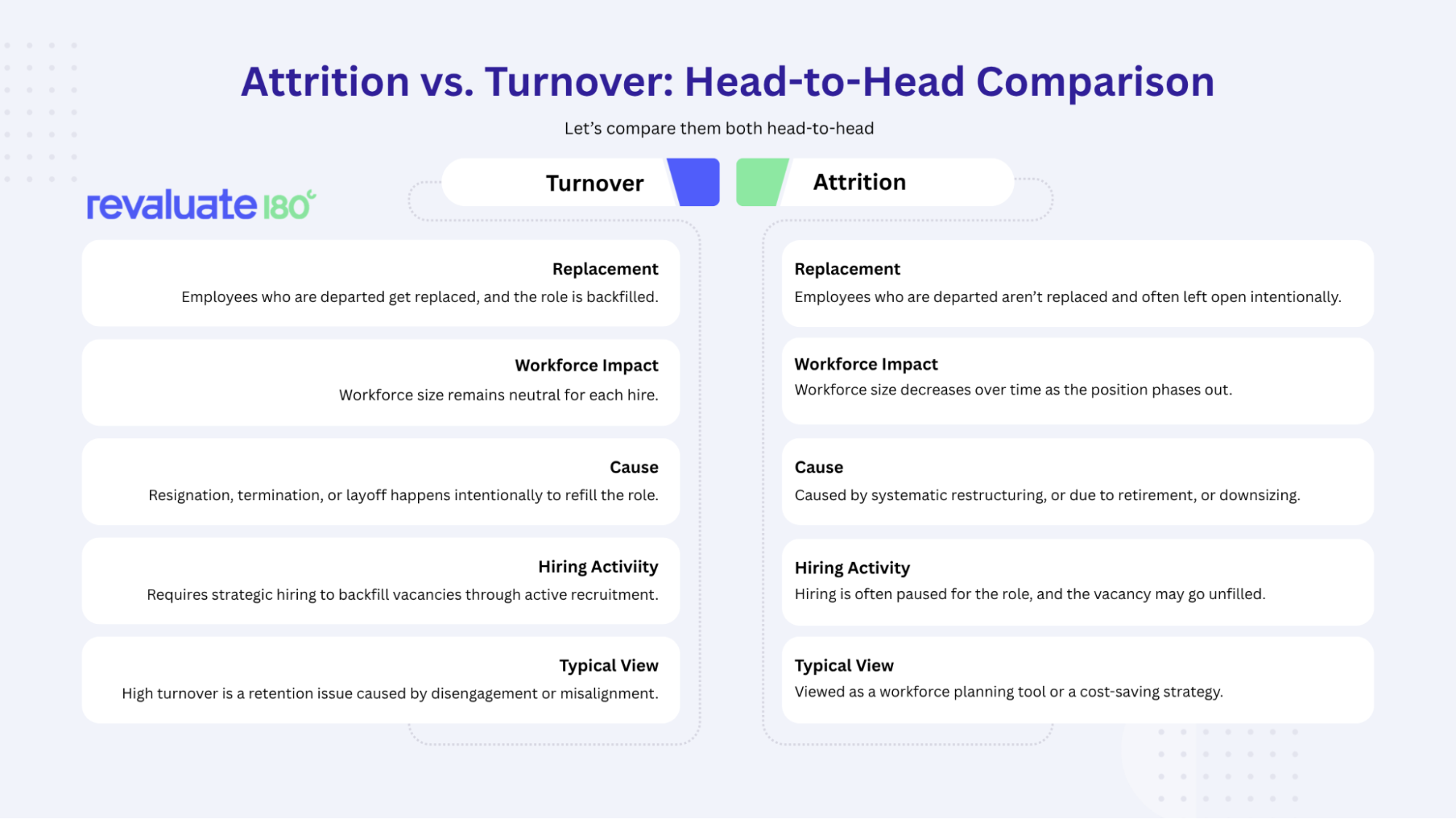
For example, a company has 100 employees at the start of the year. If 10 people quit or are laid off and all 10 positions are filled by new hires, that’s a 10% turnover rate and no attrition impact. But in the same context, if 10 exits occur during a restructuring and no one is hired to replace them, then the headcount drops to 90.
Turnover would still reflect total exits, while headcount decline reflects workforce reduction. If instead only 5 of those roles are refilled, you’d still have 10% turnover, while the headcount decline reflects workforce reduction.
How to Calculate Turnover Rate
Turnover rate is usually calculated as a percentage over a given period, typically one year or six months. Here’s the formula:
Turnover Rate = (Total number of employee departures during the period ÷ Average number of employees during the period) × 100
For example, if your company with 200 employees has 20 employees leaving over a period of one year (regardless of the reason), and the headcount remains stable, the annual turnover rate is (20 ÷ 200) × 100 = 10%.
Steps to Calculate Turnover Rate:
- Choose your period: Commonly annual or quarterly, but you can also calculate it monthly for short-term insights.
- Count departures: Include all employees who’ve departed, regardless of the reason, during the chosen period.
- Compute average headcount: (Start-of-period employees + end-of-period employees) ÷ 2. This gives you a stable average workforce size during the period.
- Apply the formula: Divide departures by average headcount, and multiply by 100 for a percentage.
How to Calculate Attrition Rate
Attrition rate is similar to the turnover formula and is often used interchangeably with turnover in HR contexts. A common formula to calculate attrition is:
Attrition Rate = (Total number of employee departures during the period ÷ Average number of employees during the period) × 100
This gives you the percentage of the workforce that left during the period. In some cases, organizations may define attrition more narrowly (for example, only voluntary exits), but this should be clearly specified.
For example, if your company with 180 employees ended the year with 170 total, and 20 people left during that year, the average headcount was (180 + 170) ÷ 2 = 175. So the attrition rate is (20 ÷ 175) × 100 ≈ 11.4%.
What is Considered a Good Attrition or Turnover Rate?
There’s no universal benchmark for an ideal attrition or turnover rate, as it depends on the industry, company size, and goals. However, HR experts often suggest that a healthy annual turnover (or attrition) rate is around 10% or less.
Additionally, you may worry about losing institutional knowledge or incurring hiring costs. A turnover rate of around 10-15% annually is considered common in many sectors. Mercer’s 2025 US survey found the average voluntary turnover to be around ~13.0%.
Also, industry context matters a lot here, since the same Mercer report shows that retail/wholesale-facing turnover is ~26.7%, while insurance turnover is only ~8.2%. If your turnover is higher than your industry peers, that’s a warning sign you may need to act on before it’s too late.
Remember: A “good” retention is the mirror metric; for instance, if retention is 90%+ and attrition is <10%, then it’s typically seen as healthy and positive. But remember to consider realistic numbers when it comes to your industry and business life cycle.
Why Organizations Track Attrition and Turnover
Tracking attrition and turnover rates is more than just counting. These metrics are essential signals about team health, and they influence many strategic decisions, such as:
Identify engagement issues
Increased turnover or attrition often indicates many underlying issues. For instance, a sudden spike in turnover in one department might indicate a toxic work environment or unreasonable workload. If you break down the numbers by team, tenure, and location, you can identify and mitigate engagement issues such as poor leadership, misalignment, or a lack of recognition.
Forecast hiring needs
If you understand your turnover trends, you can plan a strategic recruitment and budget accordingly so you don’t lose significant costs from hiring mistakes. If turnover, for instance, is historically 12% in your sales team, you’ll budget to hire that much of the workforce annually to maintain the balance.
Monitor workforce planning
Attrition figures feed directly into long-term planning since a company with a high attrition rate may need strong foundational planning. For example, if a senior employee retires, they must prepare their successors to step into their role.
Assess culture and leadership
Both turnover and attrition rates act as measurements of workplace culture. High turnover can reveal underlying issues in your culture and leadership. Even attrition can hint at culture shifts.
For instance, if many employees voluntarily leave during a period of change, it can reveal a cultural mismatch, and tracking these metrics can help leadership gradually focus on the decisions that require change.
Budget and cost control
Turnover entails direct costs, while attrition can save money by reducing hiring through strategic onboarding. A sudden drop in attrition can actually affect your budget, as the company will need to hire and fill seats more than planned. A spike in turnover may also hit your training budget and hurt the overall growth quota.
Common Causes of High Attrition and Turnover
High attrition and turnover usually stem from deeper workplace issues tied to leadership and management.
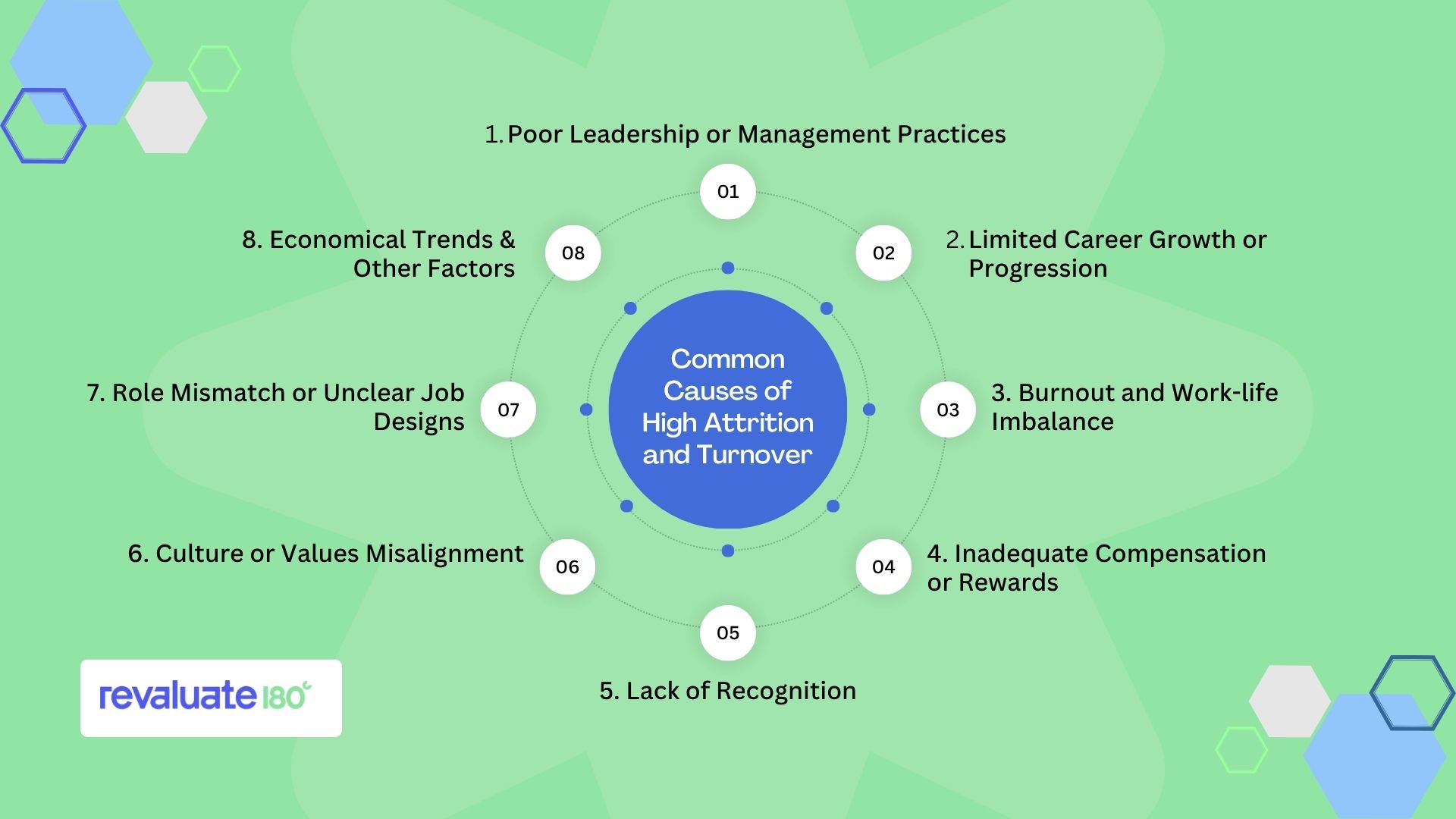
Poor leadership or management practices
Poor work ethics, such as micromanagement, lack of support, unclear expectations, or unfair treatment, can drive employees away and become a major churn driver for the business. When people don’t trust their managers, feel undervalued, or don’t feel motivated by them, leaving feels like a practical decision.
Limited career growth or progression
Employees who don’t see any clear path in their career tend to decide to look for opportunities elsewhere. If promotions are rare or the job becomes stagnant, retention will inevitably suffer. A good talent will look elsewhere if they feel stuck since they don’t want to risk stunting their professional growth.
Burnout and work-life imbalance
Overwork without relief leads to attrition since long hours, constant work pressure, or even worse (an always-on culture) can exhaust the staff and their motivation to work. Organizations that don’t address workload or burnout see their turnover rise, so that’s when it becomes crucial to act upon it.
Inadequate compensation
Pay and benefits below market rates can quickly drive turnover. Even if not in line with industry standards, inequitable pay or a lack of bonuses/incentives can damage the reputation and fuel attrition very quickly.
Lack of recognition
Feeling unappreciated is demotivating and disrespectful. When hard work isn’t acknowledged through feedback and rewards, employees often disengage and leave. It’s even more evident that a lack of appreciation directly correlates with higher turnover rates.
Culture or values misalignment
If the company’s culture clashes with its employees' values, the team suffers from poor dynamics and contributions, resulting in attrition. Toxic behavior, low psychological safety, or a gap between the shared values can cause them to fall apart and quit.
Role mismatch or unclear job design
If the actual work doesn’t match the expectations set before joining the position, it can lead to quitting, since the emotional support isn’t there. A job that grows chaotic or becomes impossible to work with due to constantly shifting priorities becomes a primary driver of turnover.
External factors
Sometimes economy or rapidly changing industry trends cause attrition or turnover to fluctuate. In a tight labor market, outside recruiters who poach talent risk higher turnover. Arguably, layoffs or hiring freezes due to an economic downturn can lead to attrition or involuntary turnover.
Using Insights to Address Attrition and Turnover
Simply tracking attrition and turnover isn’t enough if you’re not acting upon it. The real value lies in understanding why people are willing to look for opportunities elsewhere and what’s missing in your company beyond pay and benefits.
Conduct stay and exit interviews
When an employee departs, an exit interview can reveal the hidden reasons behind that decision. We say hidden because their intentions aren’t revealed unless we are actively honest and ask them what’s missing. Actively listening through one-on-ones, surveys, feedback, and exit interviews has the greatest impact in uncovering pain points.
Analyze trends by segments
If you feel there’s analysis paralysis due to so many factors, we suggest breaking them down into meaningful chunks. Look at both metrics and break them down by department, tenure, role level, or location.
This can reveal hotspots that may influence the numbers. If attrition among new hires is unusually high, the onboarding experience shall be revised. If turnover spikes at one branch, it may be an issue with local leadership.
Correlate with engagement and cultural data
Many companies prefer running employee engagement or experience surveys and combining those insights with turnover trends. For instance, if your survey scores on management are low in the budgeting department, it may indicate a morale issue.
We recommend reviewing employee engagement and experience survey questions and ensuring their needs and requirements are satisfied.
Focus on values and behavior alignment
The modern approach to attrition and turnover focuses on analyzing team values, collaboration styles, and leadership behaviours. When their expectations aren’t fulfilled, or there’s a disconnect between leader values and employee preferences, it can subtly drive friction.
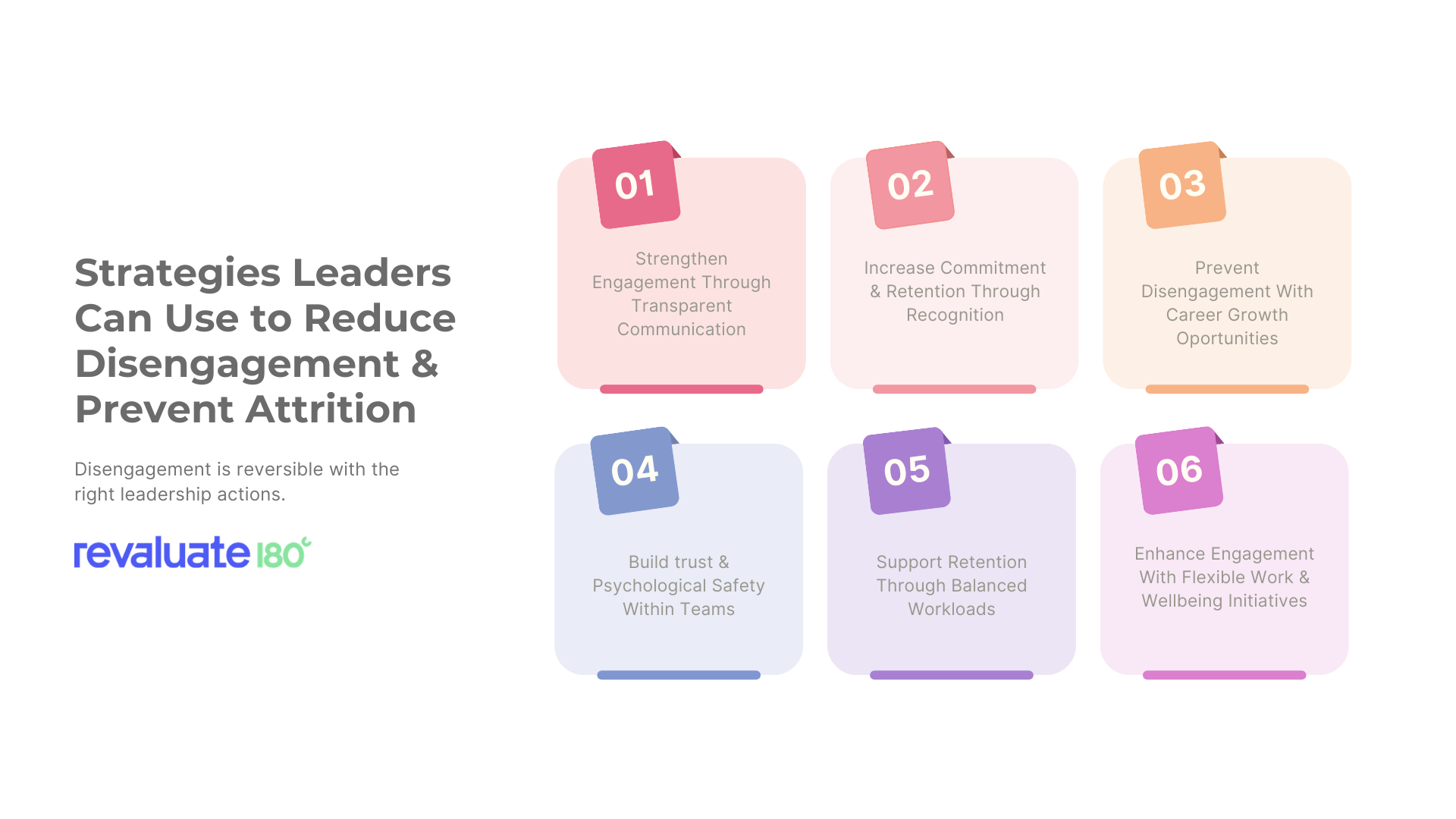
Take targeted action
Once the causes are identified, you must not keep them in the registers. Address the issue and act upon it. If a lack of career path emerges, invest in the development and training programs.
If burnout and workload are the core issues, rebalance workloads and encourage flexible time off. If the issue persists in management, you must train or replace the problematic managers.
A Final Word
Simply tracking attrition and turnover numbers is not enough. Organizations must understand why employees leave. Analyzing engagement data, leadership behavior, and team dynamics can help identify patterns behind employee departures.
Values and behavior-based insights can reveal issues such as misalignment between leadership expectations, team collaboration styles, and employee motivations.
If your organization is battling high turnover or unexpected attrition, we recommend our effective data-driven approach. Our team of experts provides leaders with insights into team dynamics, leadership effectiveness, and value alignment as a strategic initiative towards conflict resolution. We address misaligned expectations and cultural friction to identify hidden risks and mitigate them before they cause damage.

Unlock AI-Powered Hiring Analytics
Transform the way you hire with insights that create aligned, collaborative, and high-performing teams.
- Smarter Hiring Decisions
- Reduce Expensive Turnover
- AI-Driven Insights
- Optimize Team Performance