Employee disengagement costs more than just money. Gallup's State of the Global Workplace report shows disengagement costs the global economy approximately $8.8 trillion in lost productivity. Not only that, but it also hurts morale, damages productivity, and makes it difficult for businesses to compete. Worst of all, disengaged employees have the highest impact on attrition. Disengagement leads to burnout, which drives employees to leave, resulting in high attrition rates.
This isn't something you want to experience yourself. By the time your attrition rate peaks, you've already lost many growth factors. And if disengagement is the main reason for the attrition, those vacant seats remain unfilled for a long time. In this post, we’ll not only explore the essential ways to avoid this problem but also build a solid understanding of employee engagement and its impacts on attrition.
TL;DR
- Only one-third of U.S. employees report being fully engaged, while disengagement costs U.S. companies $450-$550 billion per year in lost productivity.
- Early signs include missed deadlines, absenteeism, a negative attitude, and a decline in teamwork and meaningful contributions.
- Common causes include poor leadership position, unclear goals, lack of recognition, overwork, and no career path.
- When emotional detachment sets in, loyalty fades, and workers actively seek other jobs.
- A proactive solution is for leaders to communicate transparently, recognize contributions, provide growth opportunities, and foster a culture of trust.
What is Employee Disengagement?
Employee disengagement is a state in which workers mentally and emotionally check out of their jobs. Their curiosity and enthusiasm decline as they become less committed to their work. Disengagement can range from a passive indifference by quietly quitting to actively undercutting team efforts and badmouthing the company.
This often stems from unmet needs at work, where poor leadership or communication, a lack of feedback, unclear expectations, and a toxic work culture can be primary triggers of attrition. In practice, disengaged employees might be physically present at work but mentally checked out, skipping extra work, failing to collaborate with the team, and being wary of completing the given tasks.
What Are the Early Signs of Disengaged Employees?
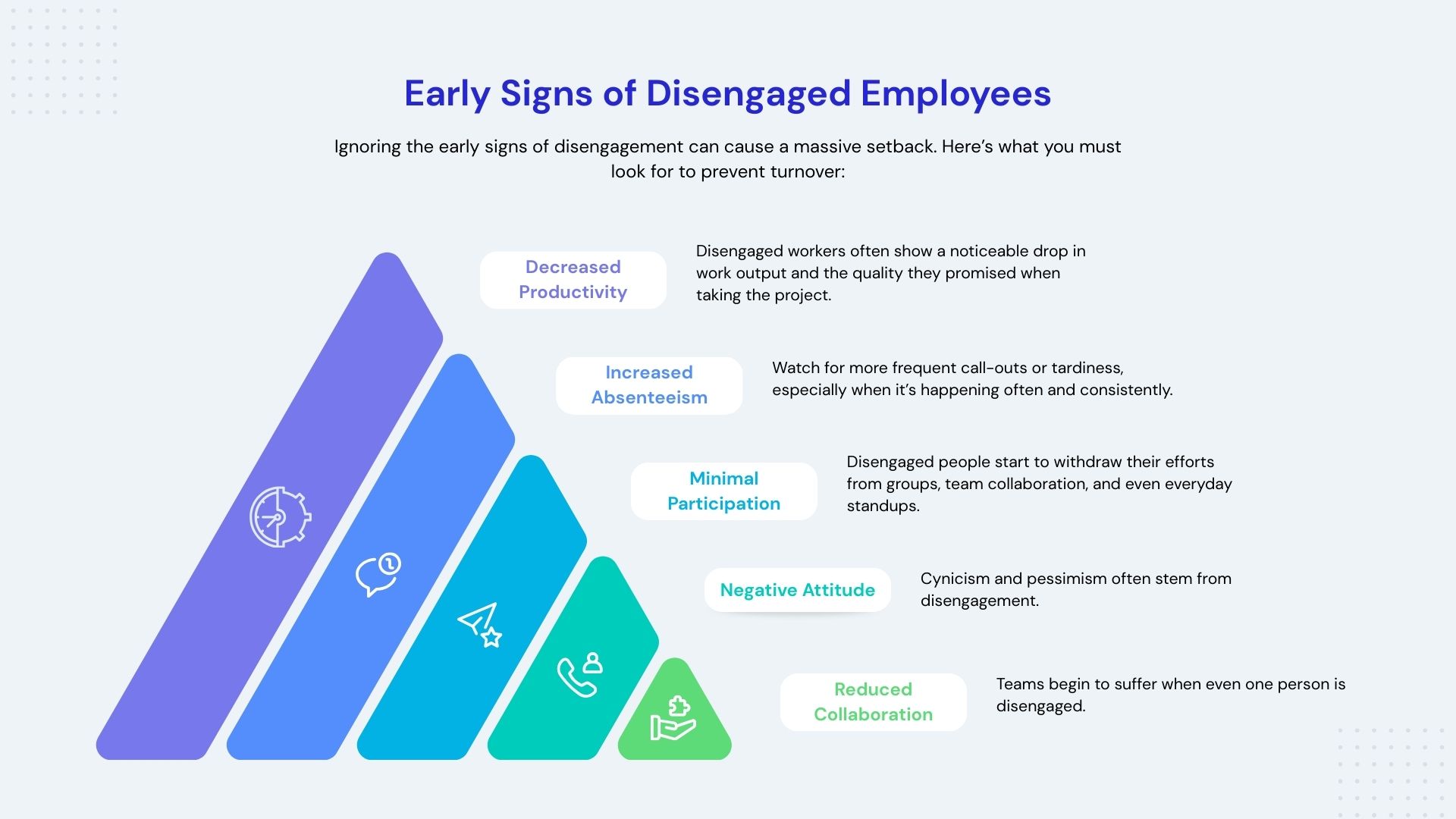
Ignoring the early signs of disengagement can cause a massive setback. Here’s what you must look for to prevent turnover:
Decreased productivity
Disengaged workers often show a noticeable drop in work output and the quality they promised when taking the project. Tasks that are supposed to be finished on time take longer to submit, mistakes increase, and work is sometimes left incomplete or rushed due to a lack of dedication to the tasks required to achieve the expected outcome. In practice, they put in time, but a lack of energy drags down their team’s performance.
Increased absenteeism
Watch for more frequent call-outs or tardiness, especially when it’s happening often and consistently. Employees who once handled scheduling conflicts by talking to their manager may start just calling in sick or skipping their shifts altogether. This habitual decrease in commitment can be a primary symptom that work no longer feels important, and long unplanned breaks start making more sense.
Minimal participation
Disengaged people start to withdraw their efforts from groups, team collaboration, and even everyday standups. They stop volunteering new ideas in meetings, rarely contribute to brainstorming sessions, and often stay under the radar by doing “just enough”. When tasks require initiative from both sides, disengaged workers tend to stick to their job descriptions and do only what’s been asked for, not what's expected.
Negative attitude
Cynicism and pessimism often stem from disengagement. When employees are disconnected from their commitments, they have valid reasons for their actions. But if they continue to be disengaged, they start to view work and co-workers through a lens of skepticism and negativity, which leads to a toxic environment. Engagement studies note that disengaged workers frequently complain more about their projects and seem generally apathetic to successes.
Reduced collaboration
Teams begin to suffer when even one person is disengaged. An unproductive employee can then become a liability rather than a valuable asset to the company. They often avoid team discussions or indulge in unnecessary gossip behind everyone’s back. This reluctance to communicate often leaves others frustrated and makes it increasingly hard to collaborate. You can spot the early signs through their performance reviews, more sick days, withdrawn stance, increasing negativity, and siloed behaviour towards people around them.
What Causes Employee Disengagement in the Workplace?
Disengagement doesn’t spawn from nowhere; it’s rooted in the workplace conditions. Some of the most common causes include:
Poor communication and unclear expectations
When employees aren’t fully aligned with the company’s goal and don’t know what success looks like, it builds frustration, especially when there’s no consistent feedback. Gallup's retention report finds unclear role expectations and detachment from the company mission as the top factors driving disengagement. Without these goals or manager feedback, employees feel lost and undervalued.
Lack of recognition or appreciation
If hard work goes unnoticed, motivation inevitably goes down. People want to know their efforts matter since their work is their primary source of motivation. Studies show that organizations that fail to recognize achievements are breeding grounds for disengagement. In fact, Gallup and Workhuman research found employees who received recognition were 45% less likely to quit over two years than those who didn’t.
Micromanagement and lack of trust
Excessive surveillance can potentially kill the autonomy and creativity at work. When leaders start micromanaging everything and treat employees like subordinates, trust in the team starts to break down, and morale plunges towards risky levels. As HR experts note, distrustful leadership and a lack of caring communication are prime drivers of direct attrition.
Limited growth opportunities
Career stagnation is one of the biggest demotivators for motivation and long-term growth. If the job feels like a dead end, employees will mentally check out long before you notice. The absence of training, skill development, and the right steps towards counseling can make people feel their careers are on hold, leading them to actively disengage. In the worst cases, career stagnation can feel scary because of the worker’s financial state, so providing aid becomes absolutely vital.
Poor role alignment
Mismatched jobs often make employees frustrated. If someone’s skills are underused or the work doesn’t fit their strengths, they start to lose interest. And when boredom creeps in, it leads to quiet quitting. Even if the role feels right at first, the lack of growth can lead to misjudgment.
Unrealistic workload and stress
Chronic workload and non-stop deadlines can lead to unprecedented burnout. When Employees constantly feel rushed with no time to break, stress compounds into disengagement. Gallup research links excessive workload and stress to burnout as a major factor for attrition.
Feeling unheard or undervalued
A lack of voice in decision-making in daily interactions can erode people's reputations. If suggestions are ignored every time or managers never ask for input, employees assume their opinions don’t matter, so they tend to disengage rather than actively work to resolve this conflict.
Lack of psychological safety
In an environment of constant blame or favoritism, people are afraid to speak the truth or take risks that’ll help them grow. Without confidence, these mistakes are tolerated while creativity vanishes, and workers tend to completely shut down and decide not to bother. In contrast, feeling seen, heard, and valued can bring back productivity, while favouritism, gossip, and scapegoating breed a toxic culture where disengagement becomes a by-product.
How Does Employee Disengagement Develop Over Time?
Disengagement often starts silently but grows in stages until it’s evident. Managers may see a gradual slide in the following:
Stage 1: Initial frustration or dissatisfaction
It all starts with dissatisfaction. They might start feeling that their managers never give feedback or that their work isn't recognized. They start to wonder if their efforts are even worth it. For instance, an employee named “Sophia” loses excitement when her contribution goes unnoticed, so she starts getting frustrated at work.
Stage 2: Emotional withdrawal
After being wary of work and getting more frustrated, workers emotionally check out and stop caring about the outcomes or the team’s success. This can look like a decline in enthusiasm, where employees begin to think their job is only about delivering a paycheck, and productivity and attention are optional.
Stage 3: Reduced effort and participation
By now, the employee is likely only doing the bare minimum, since they no longer see their work as more than just getting it done, and settle for the bare minimum. They no longer volunteer for tasks, often drop out of meetings, and avoid responsibilities in their paychecks. Their output noticeably declines at this stage, and spending more time on non-work activities feels like their way of coping. As boredom increases, colleagues may complain that their employee is mentally checked out, and if they do not do anything, they will leave the company.
Stage 4: Active job searching and exit planning
When employees are fully disengaged, they begin actively seeking opportunities elsewhere. By this point, they have lost your loyalty and might also be secretly updating their resume or interviewing around the office. If nothing changes anytime soon, they officially resign from the post and call this phase a complete detachment, in which the person is just waiting for the right time to exit.
These are the disengaging stages in action. What begins as quiet apathy escalates into a ready to quit mentality. You can resolve this issue by intervening as early as possible. If managers catch someone at stage one or two, they can often turn things around for good before losing a valuable employee.
How Does Employee Disengagement Lead to Attrition?
Disengagement can directly and indirectly drive turnover, as it rarely manifests as immediate resignations.
What is the direct link between disengagement and turnover?
The direct link to disengagement and turnover is eroded loyalty. When employees no longer feel connected to their work, they stop putting their 100% efforts. Circles explain that once emotional detachment sets in, loyalty erodes, and workers start looking for exits. Research shows that in high-turnover businesses, highly engaged teams have 18-43% lower turnover than disengaged teams.
What indirect factors impact attrition?
The indirect factors include burnout and stress. Chronic disengagement often stems from immeasurable stress and workload that uninspires workers to burn out faster. This single-handedly drives them to quit or take a prolonged leave.
Team conflict and morale also affect work indirectly. Disengagement can poison the team culture. A disengaged employee may gossip or complain, and even worse, drag their own team down. This becomes a primary demotivating factor, and overall morale in the workplace drops.
Losing trust in leadership is another major factor driving attrition. A disengaged employee may gossip or complain due to management failures, such as broken promises and a lack of support. Their trust in leadership shatters, and once it’s gone, retention plummets.
Strategies Leaders Can Use to Reduce Disengagement and Prevent Attrition
Disengagement is reversible with the right leadership actions. It’s good news when we stop pointing fingers at who is responsible for disengagement, which has been worsening business decisions for a long time. Here are the proven strategies you can use:
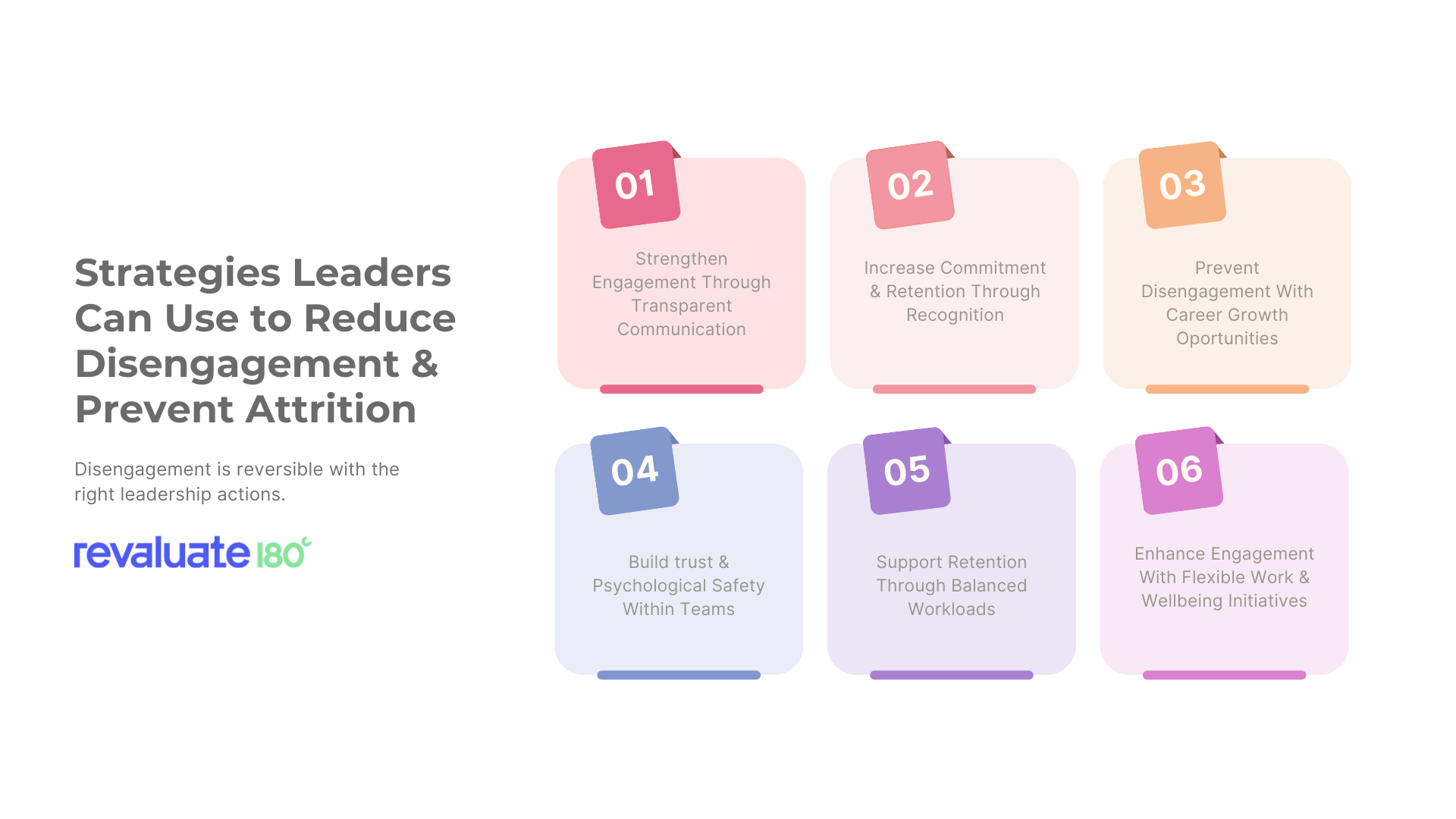
Strengthening engagement through transparent communication
Open and honest communication can take you places in terms of productivity. Leadership should clearly articulate their company’s mission and goals to reach towards what they define as success. Explain how each person’s role plays a vital part in this, and be upfront about the changes.
Increasing commitment and retention through recognition
A simple but powerful tool in the arsenal is genuine recognition. Employees who feel appreciated tend to stay for a long time and grow progressively throughout the years. Recognition can be formal through awards and bonuses, or informal through public praise and thank-you notes. The key to engagement is specific, timely appreciation.
Preventing disengagement with career growth opportunities
Show employees a future at your company. A place they can proudly lead without holding their leader’s hand all the time. Offer training, mentorship, and a clear path towards their goals. If they’re yet to decide on their direction, help them make informed decisions so they don’t waste time or get lost in life.
Even if the promotion isn’t immediate, managers can work their way up to set personal staff goals or skill-building projects. Feeling stuck is a fast track to disengagement, so proactive career conversations can help you keep your employees involved.
Building trust and psychological safety within teams
Respect and support from managers make a huge difference in how they deal with work. Leaders must ensure their employees don’t hesitate to speak up, regardless of whether they are right or wrong. Admitting mistakes and sharing ideas without any fear can compound exponentially as a trust and growth factor at work.
Supporting retention through balanced workloads
You can prevent burnout excessively by managing pressure and workload smartly and proactively. This might involve hiring extra staff to delegate tasks wisely before setting any unrealistic deadlines. Leaders should watch for signs of stress and intervene early, before they become apparent and disrupt their work routine.
Enhancing engagement with flexible work and wellbeing initiatives
Modern employees value work-life balance as much as they value their work. Offering flexible hours, remote working options, or wellness programs can restore trust and care for your team. According to HR experts, benefits such as flexible scheduling, employee assistance programs, and mental health and well-being coverage can play a significant role in buffering external stressors. Wellness programs, in particular, pay off largely by reducing stress and burnout costs while boosting morale and productivity.
Implementing these strategies doesn’t happen overnight, since you have to put in consistent effort every time you notice disengagement in action. The goal here is to create a positive feedback loop so your employees feel more valued, perform better, and bring back the productivity your workplace deserves.
Final Thoughts – Engagement is the Front Line of Retention
Employee engagement has become foundational to retention and performance, as evidence shows that businesses with highly engaged workforces outperform their peers on profitability, productivity, and turnover. Disengagement is a relatively silent talent killer, quietly draining billions of dollars from organizations every year.
But on the bright side, you can turn the tables completely regardless of the damage if you know the right strategies. By addressing frustration early, improving communication, and investing in employees’ growth and well-being, companies can not only keep their best people engaged but also build a culture that values progress and responsibility.
If disengagement and attrition are affecting your organization, Revaluate180 helps uncover root causes, align leadership, and implement data-driven strategies to improve engagement, retention, and long-term performance.

Unlock AI-Powered Hiring Analytics
Transform the way you hire with insights that create aligned, collaborative, and high-performing teams.
- Smarter Hiring Decisions
- Reduce Expensive Turnover
- AI-Driven Insights
- Optimize Team Performance